“The resources of the scholar are proportioned to his confidence in the attributes of the intellect.”
Quote by Ralph Waldo Emerson
Work
The Complete Works of Ralph Waldo Emerson: Comprising His Essays, Lectures, Poems, and Orations
The Complete Works of Ralph Waldo Emerson is a definitive compilation of the works of the American philosopher, essayist, lecturer, and poet. It encompasses his seminal essays, such as "Self-Reliance" and "Compensation," his lectures on a variety of subjects, his poetry, and his orations, which reflect his profound thoughts on individualism, nature, and the pursuit of truth. This collection provides a comprehensive view of Emerson's intellectual and literary contributions. more
Author
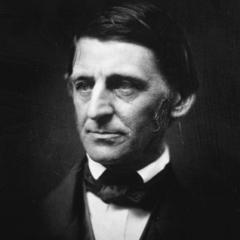
Ralph Waldo Emerson
American essayist, poet, and philosopher. Born on May 25, 1803, and died on April 27, 1882. Known for his transcendentalist philosophy, his works have had a profound impact on literature and the intellectual world. more
You May Also Like
“Welcome evermore to gods and men is the self-helping man.”
Source: Essays, lectures and orations
“Society does not love its unmaskers.”
Source: Journals and Miscellaneous Notebooks of Ralph Waldo Emerson, Volume XII: 1835-1862
“There is a remedy for every wrong and a satisfaction for every soul.”
Source: A Dream Too Wild: Emerson Meditations for Every Day of the Year
Source: Society and Solitude and Other Essays
“There is a kind of latent omniscience, not only in every man, but in every particle.”
Source: The Journals and Miscellaneous Notebooks of Ralph Waldo Emerson
“Truth is the summit of being.”
Source: The Essential Writings of Ralph Waldo Emerson
Source: The Collected Works of Ralph Waldo Emerson: Society and solitude
Source: The Conduct of Life