Quotessence
Home / Quotes / Quote by Theodor Adorno

Quote by Theodor Adorno

“Bourgeois society is ruled by equivalence. It makes the dissimilar comparable by reducing it to abstract quantities. To the enlightenment, that which does not reduce to numbers, and ultimately to the one, becomes illusion.”

Quote by Theodor Adorno

Work

Dialectic of Enlightenment

This book explores the ways in which Enlightenment values have shaped contemporary culture, analyzing the interplay between reason and irrationality in the evolution of human thought. more

Author
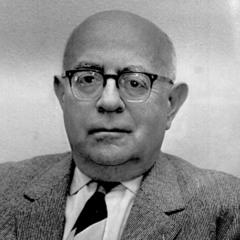
Theodor Adorno
Theodor Adorno

Theodor Adorno was a German sociologist, philosopher, and musicologist. He is renowned for his critical theory, co-developed with Max Horkheimer and other members of the Frankfurt School. Adorno's research focused on the analysis of modern society, culture, and the influence of mass culture on individuals. more

You May Also Like

“The metaphysical apologia at least betrayed the injustice of the established order through the incongruence of concept and reality. The impartiality of scientific language deprived what was powerless of the strength to make itself heard and merely provided the existing order with a neutral sign for itself. Such neutrality is more metaphysical than metaphysics.”

“In the products of the culture industry human beings get into trouble only so that they can be rescued unharmed, usually by representatives of a benevolent collective; and then, in illusory harmony, they are reconciled with the general interest whose demands they had initially experienced as irreconcilable with their own.”

“In the general tendency toward specialization, philosophy too has established itself as a specialized discipline, one purified of all specific content. In so doing, philosophy has denied its own constitutive concept: the intellectual freedom that does not obey the dictates of specialized knowledge.”

“The error in positivism is that it takes as its standard of truth the contingently given division of labor, that between the science and social praxis as well as that within science itself, and allows no theory that could reveal the division of labor to be itself derivative and mediated and thus strip it of its false authority.”

“The invocation of science, of its ground rules, of the exclusive validity of the methods that science has now completely become, now constitutes a surveillance authority punishing free, uncoddled, undisciplined thought and tolerating nothing of mental activity other than what has been methodologically sanctioned. Science and scholarship, the medium of autonomy, has degenerated into an instrument of heteronomy.”