“You heard me, only Friend whom I love. To ravish my heart, you became man. You shed your blood, what a supreme mystery!... And you still live for me on the Altar. If I cannot see the brilliance of your Face Or hear your sweet voice, O my God, I can live by your grace, I can rest on your Sacred Heart!”
Quote by Therese of Lisieux
Work
The Poetry of St. Therese of Lisieux: The Complete Edition
The Poetry of St. Therese of Lisieux: The Complete Edition is a compilation of the religious poetry composed by St. Therese of Lisieux, a Carmelite nun who lived in the late 19th and early 20th centuries. The volume offers a rich selection of her poetic works, reflecting her deep religious faith and contemplative life. The poems are a testament to her spiritual journey and offer readers a glimpse into her inner world and religious devotion. more
Author
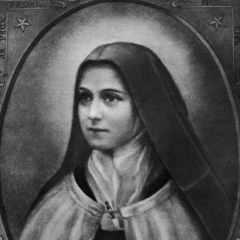
Therese of Lisieux
Thérèse of Lisieux, also known as Saint Thérèse of the Child Jesus and the Holy Face, was a French Catholic nun known for her piety and mysticism. Born on January 2, 1873, and died on September 30, 1897, she was canonized by Pope Pius XII and is one of the most famous saints of the modern era. She is revered for her simple lifestyle and deep faith, which have inspired many. more
You May Also Like
Source: The collected works of Saint John of the Cross
Source: Letters to My Brother Priests
“Laws should be interpreted in a liberal sense so that their intention may be preserved.”
“Father, I am hungry; for the love of God give this soul her food, her Lord in the Eucharist”