“You are my lover and I am your mistress and kingdoms and empires and governments have tottered and succumbed before now to that mighty combination.”
Quote by Violet Trefusis
Work
Violet to Vita: the letters of Violet Trefusis to Vita Sackville-West, 1910-21
This book features a series of letters exchanged between Violet Trefusis and Vita Sackville-West, spanning from 1910 to 1921. The correspondence delves into their personal lives, artistic inspirations, and the evolving dynamics of their friendship. The letters offer a candid glimpse into the lives of two influential figures in early 20th-century literature and society. more
Author
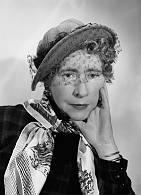
Violet Trefusis
Violet Trefusis was a British writer renowned for her romantic novels and personal correspondence. A contemporary of Virginia Woolf and Vita Sackville-West, Trefusis's writing delved into themes of love, desire, and social class, characterized by vivid and intimate prose. She was born on June 6, 1894, and passed away on February 29, 1972. more
You May Also Like
“I love her and she loves me, and we hate each other with a wild hatred born of love.”
Source: The Hemingway Collection
“Where both deliberate, the love is slight: Who ever lov'd, that lov'd not at first sight?”
Source: Lust's dominion; or, The lascivious queen. Hero and Leander. Certain of Ovid's elegies. Epigrams and elegies by John Davies and Christopher Marlowe. The first book of Lucan. Ovid's Elegies
Source: Nietzsche: Daybreak: Thoughts on the Prejudices of Morality
“I'm undaunted in my quest to amuse myself by constantly changing my hair.”
“I remember a time when everybody I loved hated me because I hated them.”
Source: The Collected Autobiographies of Maya Angelou