Quotessence
Home / Quotes / Quote by Samuel Hopkins Adams

Quote by Samuel Hopkins Adams

“Any physician who advertises a positive cure for any disease, who issues nostrum testimonials, who sells his services to a secret remedy, or who diagnoses and treats by mail patients he has never seen, is a quack.”

Quote by Samuel Hopkins Adams

Author
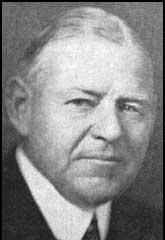
Samuel Hopkins Adams

Samuel Hopkins Adams was an American writer and investigative journalist, known for his muckraking journalism. Born on January 26, 1871, and dying on November 16, 1958, Adams is celebrated for his exposés on the pharmaceutical industry's unsanitary conditions and fraudulent practices. more

You May Also Like

“He, who for an ordinary cause, resigns the fate of his patient to mercury, is a vile enemy to the sick; and, if he is tolerably popular, will, in one successful season, have paved the way for the business of life, for he has enough to do, ever afterward, to stop the mercurial breach of the constitutions of his dilapidated patients. He has thrown himself in fearful proximity to death, and has now to fight him at arm's length as long as the patient maintains a miserable existence.”

“I like to think that when Medawar and his colleagues showed that immunological tolerance could be produced experimentally the new immunology was born. This is a science which to me has far greater potentialities both for practical use in medicine and for the better understanding of living process than the classical immunochemistry which it is incorporating and superseding.”

“Medicine deals with the states of health and disease in the human body. It is a truism of philosophy that a complete knowledge of a thing can only be obtained by elucidating its causes and antecedents, provided, of course, such causes exist. In medicine it is, therefore, necessary that causes of both health and disease should be determined.”

“Medicine is a science which hath been (as we have said) more professed than laboured, and yet more laboured than advanced: the labour having been, in my judgment, rather in circle than in progression. For I find much iteration, but small addition. It considereth causes of diseases, with the occasions or impulsions; the diseases themselves, with the accidents; and the cures, with the preservation.”