Quotessence
Home / Quotes / Quote by Leo Tolstoy

Quote by Leo Tolstoy

“It will pass, it will all pass, we're going to be so happy! If our love could grow any stronger it would grow stronger because there is something horrifying in it.”

Quote by Leo Tolstoy

Work

ANNA KARENINA

Anna Karenina is a profound literary work that delves into the complexities of human relationships and the impact of societal expectations on individual lives. The story follows the tragic fate of Anna, a married woman who falls in love with Count Vronsky, leading to a series of dramatic events that challenge the moral and social fabric of her world. more
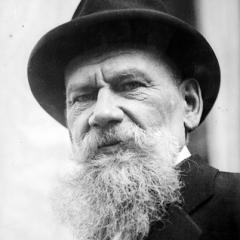
Author

Leo Tolstoy
Leo Tolstoy

Leo Tolstoy was a Russian writer and thinker, a prominent representative of 19th-century Russian literature. His works deeply revealed social contradictions and human nature, and had a profound impact on the world. more

You May Also Like

“Until then I had thought each book spoke of the things, human or divine, that lie outside books. Now I realized that not infrequently books speak of books: it is as if they spoke among themselves. In the light of this reflection, the library seemed all the more disturbing to me. It was then the place of a long, centuries-old murmuring, an imperceptible dialogue between one parchment and another, a living thing, a receptacle of powers not to be ruled by a human mind, a treausre of secrets emanated by many minds, surviving the death of those who had produced them or had been their conveyors.”

“These loaves, pigeons, and two little boys seemed unearthly. It all happened at the same time: a little boy ran over to a pigeon, glancing over at Levin with a smile; the pigeon flapped its wings and fluttered, gleaming in the sunshine among the snowdust quivering in the air, while the smell of freshly baked bread was wafted out of a little window as the loaves were put out. All this together was so extraordinarily wonderful that Levin burst out laughing and crying for joy.”

“What I bring to the interview is respect. The person recognizes that you respect them because you're listening. Because you're listening, they feel good about talking to you. When someone tells me a thing that happened, what do I feel inside? I want to get the story out. It's for the person who reads it to have the feeling . . . In most cases the person I encounter is not a celebrity; rather the ordinary person. "Ordinary" is a word I loathe. It has a patronizing air. I have come across ordinary people who have done extraordinary things. (p. 176)”