Quotessence
Home / Quotes / Quote by Quentin Tarantino

Quote by Quentin Tarantino

“Sometimes things need to get really bad before they can ever get better. Really bad can become untenable if enough people get sick of it. That was a big thing about why I ended up taking part in that rally [against police brutality] and ended up voicing my opinion and declaring what side I was standing on.”

Quote by Quentin Tarantino

Author
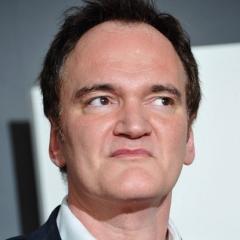
Quentin Tarantino
Quentin Tarantino

Quentin Tarantino (born March 27, 1963) is an acclaimed American film director, screenwriter, and actor renowned for his distinctive nonlinear storytelling, sharp dialogue, and homage to classic film genres. His 1992 debut Reservoir Dogs gained critical attention, while Pulp Fiction (1994) won the Palme d'Or and an Academy Award, establishing him as a revolutionary force in independent cinema. Known for blending black humor, violence, and pop culture references, Tarantino has created iconic films including Kill Bill, Inglourious Basterds, Django Unchained, and Once Upon a Time in Hollywood. more

You May Also Like

“You should be able to criticize civil servants for what you think is wrongdoing without being painted as a cop-hater. I don't feel the police are all corrupt, however I do feel they are suffering from institutional racism and there needs to be a top-to-bottom examination of the way they practice and the way they criminalize young black and brown males. The fact that they seem to have backed off from it seems to suggest they realize they overreacted on me and it looks bad.”

“If it's too much for people, if audiences don't accept it, well I guess that's just the way it is. I'm not being cavalier when it comes to my financial partners, but I think I've earned the right to do my thing my way. While I really want it to do well and it would be lovely if it's popular, movies are for a long time. I'm really proud of the piece. If it ends up not connecting with audiences, I won't be heartbroken. I'll be a little disappointed, but I won't be heartbroken.”

“When you're in a two-shot together, you can't be the same as when you're both in singles. Try as you will, it cannot be the same as when you're in the shot together. It simply cannot be. It's physically impossible. You're behind the camera desperately wanting to help your colleague. When it's just you, on your own, it can be self-conscious in a way that you're not when we're just talking, you and I, and then all of a sudden it's me and then it's you. The two-shots were probably more natural.”

“The color palette grew as the story progressed. The 1920's sharecroppers were muted and neutrals, the 30's and 40's introduced burgundy to the neutral palette. The 1950's introduced green, black and denim blue, the 1960's introduced orange and heavier more saturated color, the 1970's introduced more primaries, and the fashion palette became more recognizable as a contemporary one from there.”

“I begin with understanding the intentions of the story. That helps me to zero in. Then I gather research for each individual character and analyze the time period with comparisons to the figure and the facial structure. It helps to be comfortable with computers because the massive amount of research is kept electronically and shared with my staff this way. Very little is printed out. I work with an illustrator to come up with the proper silhouettes and details of the clothing from the time period to time period. And on and on.”

“My favorite part about costume designing is the artistry of the job. You meet with a director and a visionary to discuss ideas. You research the characters and figure out the components of their look through your own vision. You create a color palette for a film, television or stage medium and discuss it with the director of photography who then lights your colored subjects.”