Quotessence
Home / Quotes / Quote by Garry Kasparov

Quote by Garry Kasparov

“From Ukraine to Syria, he [Vladimir Putin] is behaving like the world's new general and celebrating victories, while the American president sits on the sidelines and Europe sleeps. The West's behavior toward Putin is political and moral capitulation.”

Quote by Garry Kasparov

Author
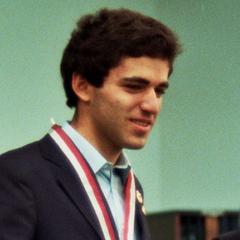
Garry Kasparov
Garry Kasparov

Garry Kasparov is a renowned chess grandmaster, writer, and activist. Born on April 13, 1963, he is considered one of the greatest chess players in history, having won multiple world chess championships. Kasparov's achievements are not limited to the chessboard; he is also a prominent figure in social and political activism, promoting the culture of chess and advocating for democratic ideals. more

You May Also Like

“[Vladimir] Putin spoke unabashedly about the importance of national sovereignty in Syria, a concept apparently near and dear to his heart, unless it comes to the sovereignty of Georgia, Ukraine or any other country in which he intervenes. Then he offered his cooperation, but without making any concrete concessions at all. And he didn't have to, either. He knows what he can rely on. He has assets that are more valuable than words: He has tanks in Ukraine, fighter jets in Syria - and Barack Obama in the White House.”

“Many politicians in the West cling to the notion of a partnership with Russia. They want to include [Vladimir] Putin, make compromises and constantly negotiate new deals with him. But history has taught us that the longer we pursue appeasement and do nothing, the higher the price will be later on. Dictators don't ask "Why?" before they seize even more power. They ask: "Why not?"”

“The sanctions and travel restrictions would have to be far more comprehensive to be truly painful for [Vladimir] Putin and his inner circle. And the new middle class should also feel the effects of what he is doing. For instance, we should ask those who wish to enter the EU whether they have visited illegally occupied Crimea in the last few months and, if the answer is "yes," deny them a visa.”

“When [Vladimir] Putin, a former lieutenant-colonel in the KGB, became Russia's president on December 31, 1999 - eight years after the failed coup attempt against (then Soviet leader Mikhail) Gorbachev, and eight years after the people had torn down the statue of Felix Dzerzhinsky, the hated founder of the KGB, in Moscow - it was admittedly a shock. Nevertheless, I decided to give Putin a chance. He seemed dynamic and capable of learning. But I had to bury my hopes after just a few months. He proved to be an autocrat - and, because the West let him do as he pleased, he became a dictator.”