Quotessence
Home / Quotes / Quote by Ronald Fisher

Quote by Ronald Fisher

“Experimental observations are only experience carefully planned in advance, and designed to form a secure basis of new knowledge.”

Quote by Ronald Fisher

Author
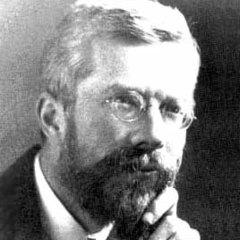
Ronald Fisher
Ronald Fisher

Ronald Fisher (February 17, 1890 – July 29, 1962) was a British statistician, geneticist, and evolutionary biologist, regarded as one of the founders of modern statistics. He developed key statistical methods such as analysis of variance, maximum likelihood estimation, and Fisher's exact test, and applied statistical theory to genetics and evolutionary biology, contributing to the modern evolutionary synthesis. Fisher studied mathematics and physics at Cambridge University, later worked at Rothamsted Experimental Station and University College London, and spent his final years in Australia. His work profoundly influenced experimental design, biostatistics, and population genetics, though his support for eugenics remains controversial. more

You May Also Like

“I do not personally want to believe that we already know the equations that determine the evolution and fate of the universe; it would make life too dull for me as a scientist. ... I hope, and believe, that the Space Telescope might make the Big Bang cosmology appear incorrect to future generations, perhaps somewhat analogous to the way that Galileo's telescope showed that the earth-centered, Ptolemaic system was inadequate.”

“It required unusual inquisitiveness to pursue the development of scientific curiosities such as charged pith balls, the voltaic cell, and the electrostatic machine. Without such endeavors and the evolution of associated instrumentation, initially of purely scientific interest, most of the investigations that lead to the basic equations of electromagnetism would have been missed. ... We would have been deprived of electromagnetic machinery as well as knowledge of electromagnetic waves.”

“Students who have attended my [medical] lectures may remember that I try not only to teach them what we know, but also to realise how little this is: in every direction we seem to travel but a very short way before we are brought to a stop; our eyes are opened to see that our path is beset with doubts, and that even our best-made knowledge comes but too soon to an end.”

“Theorists tend to peak at an early age; the creative juices tend to gush very early and start drying up past the age of fifteen-or so it seems. They need to know just enough; when they're young they haven't accumulated the intellectual baggage.”

“[The scientist] believes passionately in facts, in measured facts. He believes there are no bad facts, that all facts are good facts, though they may be facts about bad things, and his intellectual satisfaction can come only from the acquisition of accurately known facts, from their organization into a body of knowledge, in which the inter-relationship of the measured facts is the dominant consideration.”

“One must search diligently to find laudatory comments on education (other than those pious platitudes which are fodder for commencement speeches). It appears that most persons who have achieved fame and success in the world of ideas are cynical about formal education. These people are a select few, who often achieved success in spite of their education, or even without it. As has been said, the clever largely educate themselves, those less able aren't sufficiently clever or imaginative to benefit much from education.”