Quotessence
Home / Quotes / Quote by Melinda Gates

Quote by Melinda Gates

“We have to look at it country by country. In places like the developing world where, as you say, in Mumbai, it's about five hours' gap between what a woman does and a man does. You have to start by recognizing the problem and talking about it, trying to change those roles.”

Quote by Melinda Gates

Author
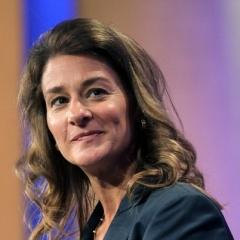
Melinda Gates
Melinda Gates

Melinda Gates is a distinguished businesswoman and philanthropist, co-founder of the Bill & Melinda Gates Foundation, one of the world's largest private foundations. She has been deeply involved in the foundation's efforts to improve global health and education, with a particular focus on reducing poverty and enhancing lives worldwide. more

You May Also Like

“Like in Africa, if somebody doesn't have fuel, they're still going and collecting firewood. If they get an oven, that's a huge difference. You can do things to reduce the inequities by making sure that they can get clean energy, safe energy. To make sure they're not having to collect water every day. That's huge for women in the developing world.”

“We also ought to recognize that unpaid labor falls predominantly to women. The other thing I would do in countries like the U.S. is to show more men, even in TV ads, doing household work. Only two percent of ads show men doing chores, and yet we know they actually do several hours of it in real life. Those images affect young boys and girls.”

“In the developing world, they don't have smartphones yet. They have the older plastic phones, but women are saving money on those, because they don't have access to banks. Having that access to digital money changes everything for her because she actually doesn't have to negotiate with her husband, which she will tell you is very hard in these circumstances, especially when the means are meager. She's expected to have money to pay for the kids' health or to help with the school fees.”

“We also look at farming. Are we making sure that we're getting the latest seeds out to women so they can get a bigger yield off of their farms? A new type of seed that gets out to a man, let's say, that's drought resistant - because, of course, the rains are changing in Africa with climate change - if you don't put it in the hands of a woman, she won't necessarily get it. We look at breaking down all those barriers.”