Quotessence
Home / Quotes / Quote by Adolf Hitler

Quote by Adolf Hitler

“The National Government will regard it as its first and foremost duty to revive in the nation the spirit of unity and cooperation. It will preserve and defend those basic principles on which our nation has been built. It regards Christianity as the foundation of our national morality, and the family as the basis of national life.”

Quote by Adolf Hitler

Author
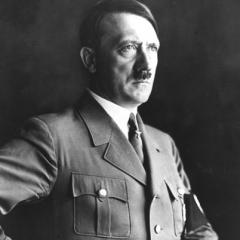
Adolf Hitler
Adolf Hitler

Adolf Hitler, born on April 20, 1889, and died on April 30, 1945, was a significant political figure in German history. He served as the Chancellor and Führer of Nazi Germany, playing a decisive role in the outbreak of World War II and having a profound impact on world history during his reign. more

You May Also Like

“It is sometimes suggested that the [Nazi economic] recovery was a product of a specific fascist economic strategy, which distinguished it from the recovery efforts of other capitalist states. While few would disagree that the Nazi regime had a number of clear ideological preferences when it came to the economy, the policies pursued in 1933 had much in common with those adopted in other countries, and with the policies of the pre-Hitler governments.”

“The Reichswirtschaftsministerium ('Reich Ministry of Economic Affairs') tells the shop managers what and how to produce, at what prices and from whom to buy, at what prices and to whom to sell. It assigns every worker to his job and fixes his wages. It decrees to whom and on what terms the capitalists must entrust their funds. Market exchange is merely a sham.”

“In the election campaign of 1930, Hitler seldom spoke explicitly of Jews. The crude tirades of the early 1920s were missing altogether. 'Living-space' figured more prominently, posed against the alternative international competition for markets ... The key theme now was the collapse of Germany under parliamentary democracy and party government into a divided people with separate and conflicting interests, which only the NSDAP could overcome by creating a new unity of the nation, transcending class, estate and profession.”

“Though anti-Semitism had been only one of several sources of Nazi voting strength, after 1933 Hitler placed anti-Semitic ideologues, the most important of whom were Joseph Goebbels, Otto Dietrich and Alfred Rosenberg, at the top of the key opinion-shaping institutions. In a dictatorship resting on the 'leadership principle', Hitler's anti-Semitic convictions defined policy.”