“On the train I had a lot of time to think. I thought how in the thirty years of my life I had seldom gotten on a train in America without being conscious of my color. In the South, there are Jim Crow cars and Negroes must ride separate from the whites, usually in a filthy antiquated coach next to the engine, getting all the smoke and bumps and dirt. In the South, we cannot buy sleeping car tickets. Such comforts are only for white folks. And in the North where segregated travel is not the law, colored people have, nevertheless, many difficulties. In auto buses they must take the seats in the rear, over the wheels. On the boats they must occupy the worst cabins. The ticket agents always say that all other accommodations are sold. On trains, if one sits down by a white person, the white person will sometimes get up, flinging back an insult at the Negro who has dared to take a seat beside him. Thus it is that in America, if you are yellow, brown, or black, you can never travel anywhere without being reminded of your color, and oft-times suffering great inconveniences. I sat in the comfortable sleeping car on my first day out of Moscow and remembered many things about trips I had taken in America. I remembered how, once as a youngster going alone to see my father who was working in Mexico, I went into the dining car of the train to eat. I sat down at a table with a white man. The man looked at me and said, "You're a nigger, ain't you?" and left the table. It was beneath his dignity to eat with a Negro child. At St. Louis I went onto the station platform to buy a glass of milk. The clerk behind the counter said, “We don't serve niggers," and refused to sell me anything. As I grew older I learned to expect this often when traveling. So when I went South to lecture on my poetry at Negro universities, I carried my own food because I knew I could not go into the dining cars. Once from Washington to New Orleans, I lived all the way on the train on cold food. I remembered this miserable trip as I sat eating a hot dinner on the diner of the Moscow-Tashkent express. Traveling South from New York, at Washington, the capital of our country, the official Jim Crow begins. There the conductor comes through the train and, if you are a Negro, touches you on the shoulder and says, "The last coach forward is the car for colored people." Then you must move your baggage and yourself up near the engine, because when the train crosses the Potomac River into Virginia, and the dome of the Capitol disappears, it is illegal any longer for white people and colored people to ride together. (Or to eat together, or sleep together, or in some places even to work together.) Now I am riding South from Moscow and am not Jim-Crowed, and none of the darker people on the train with me are Jim-Crowed, so I make a happy mental note in the back of my mind to write home to the Negro papers: "There is no Jim Crow on the trains of the Soviet Union.”
Quote by Langston Hughes
Work
Good Morning, Revolution: Uncollected Social Protest Writings
Browse quotes and source details for this work. more
Author
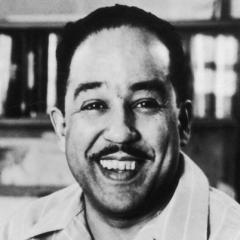
Langston Hughes
American poet, writer, playwright, editor, and actor. Langston Hughes is one of the most prominent figures of the Harlem Renaissance, known for his poetry and prose. His works often explore themes of race, class, and identity, and have been beloved by readers. more
You May Also Like
Source: The Return of Simple
“Begin with courage, not perfection. What is required is not perfection, but the courage to begin.”
Source: The Light in the Heart
Source: Good Morning, Revolution: Uncollected Social Protest Writings
“Jim Crow wasn't nothing but slavery, wrapped up in a nice little gift card." -Rev. John Kennard”
Source: Those Who Saw the Sun: African American Oral Histories from the Jim Crow South
Source: The New Jim Crow: Young Readers’ Edition: Mass Incarceration in the Age of Colorblindness
Source: A Knock at Midnight: A Story of Hope, Justice, and Freedom
Source: Wilt, 1962: The Night of 100 Points and the Dawn of a New Era
Source: Four Hundred Souls: A Community History of African America, 1619-2019
Source: The Right to Sex: Feminism in the Twenty-First Century
Source: Turn The Tables