Quotessence
Home / Quotes / Quote by James M. Barrie

Quote by James M. Barrie

“It was then that Hook bit him. Not the pain of this but its unfairness was what dazed Peter. It made him quite helpless. He could only stare, horrified. Every child is affected thus the first time he is treated unfairly. All he thinks he has a right to when he comes to you to be yours is fairness. After you have been unfair to him he will love you again, but he will never afterwards be quite the same boy. No one ever gets over the first unfairness; no one except Peter.”

Quote by James M. Barrie

Author
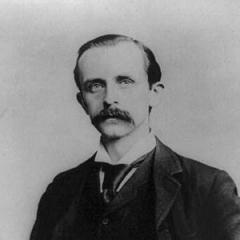
James M. Barrie
James M. Barrie

James M. Barrie, born on May 9, 1860, in Edinburgh, Scotland, and died on June 19, 1937, was a renowned British novelist and playwright. He is best known for his classic children's novel 'Peter Pan'. Barrie's unique literary style and contributions to children's literature have earned him widespread acclaim. more

You May Also Like

“But why do only unimportant things?" asked Milo, who suddenly remembered how much time he spent each day doing them. "Think of all the trouble it saves," the man explained, and his face looked as if he'd be grinning an evil grin--if he could grin at all. "If you only do the easy and useless jobs, you'll never have to worry about the important ones which are so difficult. You just won't have the time. For there's always something to do to keep you from what you really should be doing, and if it weren't for that dreadful magic staff, you'd never know how much time you were wasting.”

“we might also call vertigo the intoxication of the weak. aware of his weakness, a man decides to give in rather than stand up to it. he is drunk with weakness, wishes to grow even weaker, wishes to fall down in the middle of the main square in front of everybody, wishes to be down, lower than down.”

“you're an insomniac, you tell yourself: there are profound truths revealed only to the insomniac by night like those phosphorescent minerals veined and glimmering in the dark but coarse and ordinary otherwise; you have to examine such minerals in the absence of light to discover their beauty, you tell yourself.”

“Old stories would tell how Weavers would kill each other over aesthetic disagreements, such as whether it was prettier to destroy an army of a thousand men or to leave it be, or whether a particular dandelion should or should not be plucked. For a Weaver, to think was to think aesthetically. To act - to Weave - was to bring about more pleasing patterns. They did not eat physical food: they seemed to subsist on the appreciation of beauty.”

“Here's an example: someone says, "Master, please hand me the knife," and he hands them the knife, blade first. "Please give me the other end," he says. And the master replies, "What would you do with the other end?" This is answering an everyday matter in terms of the metaphysical. When the question is, "Master, what is the fundamental principle of Buddhism?" Then he replies, "There is enough breeze in this fan to keep me cool." That is answering the metaphysical in terms of the everyday, and that is, more or less, the principle zen works on. The mundane and the sacred are one and the same.”

“galatea was a serious girl. she was pale and looked like tears all over. big ed passed his hand through his hair and said hello. she looked at him steadily. "where have you been? why did you do this to me?" and she gave dean a dirty look; she knew the score. dean paid absolutely no attention; what he wanted now was food; he asked jane if there was anything. the confusion began right there.”