Quotessence
Home / Quotes / Quote by Milan Kundera

Quote by Milan Kundera

“we might also call vertigo the intoxication of the weak. aware of his weakness, a man decides to give in rather than stand up to it. he is drunk with weakness, wishes to grow even weaker, wishes to fall down in the middle of the main square in front of everybody, wishes to be down, lower than down.”

Quote by Milan Kundera

Author
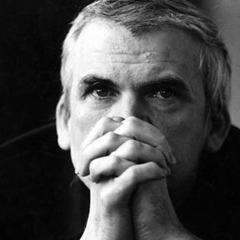
Milan Kundera
Milan Kundera

Milan Kundera is a renowned Czech-French writer known for his profound psychological insights and unique narrative techniques. His works often explore themes of personal freedom, love, morality, and existentialism, with notable titles including 'The Unbearable Lightness of Being' and 'The Joke'. more

You May Also Like

“you're an insomniac, you tell yourself: there are profound truths revealed only to the insomniac by night like those phosphorescent minerals veined and glimmering in the dark but coarse and ordinary otherwise; you have to examine such minerals in the absence of light to discover their beauty, you tell yourself.”

“Old stories would tell how Weavers would kill each other over aesthetic disagreements, such as whether it was prettier to destroy an army of a thousand men or to leave it be, or whether a particular dandelion should or should not be plucked. For a Weaver, to think was to think aesthetically. To act - to Weave - was to bring about more pleasing patterns. They did not eat physical food: they seemed to subsist on the appreciation of beauty.”

“Here's an example: someone says, "Master, please hand me the knife," and he hands them the knife, blade first. "Please give me the other end," he says. And the master replies, "What would you do with the other end?" This is answering an everyday matter in terms of the metaphysical. When the question is, "Master, what is the fundamental principle of Buddhism?" Then he replies, "There is enough breeze in this fan to keep me cool." That is answering the metaphysical in terms of the everyday, and that is, more or less, the principle zen works on. The mundane and the sacred are one and the same.”

“galatea was a serious girl. she was pale and looked like tears all over. big ed passed his hand through his hair and said hello. she looked at him steadily. "where have you been? why did you do this to me?" and she gave dean a dirty look; she knew the score. dean paid absolutely no attention; what he wanted now was food; he asked jane if there was anything. the confusion began right there.”

“we left about midnight and walked down the hill in silence. the night was muggy, and all around me i felt the same pressure, a sense of time rushing by while it seemed to be standing still. whenever i thought of time in puerto rico, i was reminded of those old magnetic clocks that hung on the walls of my classrooms in high school. every now and then a hand would not move for several minutes -- and if i watched it long enough, wondering if it had finally broken down, the sudden click of the hand jumping three for four notches would startle me when it came.”

“You have to be an artist and a madman, a creature of infinite melancholy, with a bubble of hot poison in your loins and a super-voluptuous flame permanently aglow in your subtle spine (oh, how you have to cringe and hide!), in order to discern at once, by ineffable signs―the slightly feline outline of a cheekbone, the slenderness of a downy limbs, and other indices which despair and shame and tears of tenderness forbid me to tabulate―the little deadly demon among the wholesome children; she stands unrecognized by them and unconscious herself of her fantastic power.”

“Ignore that nightmare in the bathroom. Just another ugly refugee from the Love Generation, some doom-struck gimp who couldn't handle the pressure. My attorney has never been able to accept the notion - often espoused by reformed drug abusers and especially popular among those on probation - that you can get a lot higher without drugs than with them. And neither have I, for that matter.”