Quotessence
Home / Quotes / Quote by John Stuart Mill

Quote by John Stuart Mill

Work

On Liberty, Utilitarianism and Other Essays

This book is a compilation of essays that delve into the concepts of individual liberty, the ethical theory of utilitarianism, and broader moral philosophical considerations. The essays are known for their insightful analysis and contribution to the fields of ethics and political philosophy. more

Author
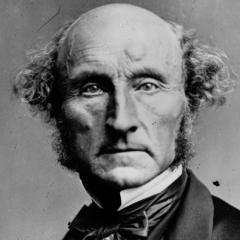
John Stuart Mill
John Stuart Mill

John Stuart Mill was an influential British philosopher, economist, and logician. He is one of the most important figures in 19th-century philosophy and his ideas had a profound impact on political, social, and philosophical thought of the time. more

You May Also Like

“Since people, in a competitive or any other society, are by no means always just to each other, some regulation by the state in its capacity of umpire is unavoidable, What must be kept in mind is that the greatest in of all is done when the umpire forgets that he too is bound by the rules, and begins to make them as between contestants in behalf of his own prejudices.”

“Given that the nineteenth century was the century of Socialism, of Liberalism, and of Democracy, it does not necessarily follow that the twentieth century must also be a century of Socialism, Liberalism and Democracy: political doctrines pass, but humanity remains, and it may rather be expected that this will be a century of authority ... a century of Fascism. For if the nineteenth century was a century of individualism it may be expected that this will be the century of collectivism and hence the century of the State.”

“The Government has been compelled to levy taxes which unavoidably hit large sections of the population. The Italian people are disciplined, silent and calm, they work and know that there is a Government which governs, and know, above all, that if this Government hits cruelly certain sections of the Italian people, it does not so out of caprice, but from the supreme necessity of national order.”

“The Constitution supposes what the history of all governments demonstrates, that the executive is the branch of power most interested in war and most prone to it. It has accordingly with studied care, vested the question of war in the legislature. [If a president is successful in bypassing the Congress] it is evident that the people are cheated out of the best ingredients in the government, the safeguards of peace which is the greatest of their blessings.”