Quotessence
Home / Quotes / Quote by Aristotle

Quote by Aristotle

“Most persons think that a state in order to be happy ought to be large; but even if they are right, they have no idea of what is a large and what a small state.... To the size of states there is a limit, as there is to other things, plants, animals, implements; for none of these retain their natural power when they are too large or too small, but they either wholly lose their nature, or are spoiled.”

Quote by Aristotle

Work

The Essential Aristotle

This compilation brings together essential writings of Aristotle, offering readers a concise yet profound understanding of his intellectual legacy. It includes extracts from his major treatises, providing a glimpse into his logical reasoning, empirical observations, and philosophical theories that have influenced Western thought for centuries. more

Author
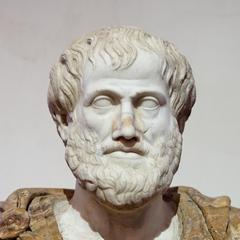
Aristotle
Aristotle

Aristotle, a renowned Greek philosopher, is one of the founders of Western philosophy. His thoughts covered a wide range of fields, including ethics, logic, politics, and had a profound impact on the world. more

You May Also Like

“New pressures are causing ever more people to find their main satisfaction in their consumptive role rather than in their productive role. And these pressures are bringing forward such traits as pleasure-mindedness, self-indulgence, materialism, and passivity as conspicuous elements of the American character.”

“Our present culture, however, specializes in inflaming endless lust for possessions with advertisements that constantly convince us that we need more (particularly to create the ease we have never found). The marketers don't tell us much about their products, but they spend a great deal of energy (and enormous amounts of money) appealing to our fears and dreams. Thus, the idolatry of possessions plays to the deeper idolatry of our selves-and in an endlessly consuming society, persons are always remaking themselves with new belongings.”

“Overconsumption is a "cancer eating away at our spiritual vitals." It cuts the heart right out of our compassion. It distances us from the great masses of broken bleeding humanity. It converts us into materialists. We become less able to ask moral questions. For example, just because we have the economic muscle to buy up vast amounts of the world's oil, does that give us the right to do so? When the poor farmer of India is unable to buy a gallon of gasoline to run his simple water pump because the world's demand has priced him out of the market, who is to blame?”

“Overpopulation is the problem of the third and fourth World; over-consumption is the problem of the West. The average American child this year will consume as much of the world's resources as twenty children born in India. Deliberate and calculated waste is the central aspect of the American economy. We over-eat, over-buy, and over-built, spewing out our toxic wastes upon the earth and into the air.”

“Side by side with the miseries of underdevelopment...we find ourselves up against a form of superdevelopment, equally inadmissable. This superdevelopment consists in an excessive availability of material goods for the benefit of certain social groups and makes people slaves of "possession" and immediate gratification, with no other horizon than the multiplication or continual replacement of the things already owned with others still better. This is the civilization of consumption, or "consumerism," which involves so much throwing away and waste.”