Quotessence
Home / Quotes / Quote by Pope John Paul II

Quote by Pope John Paul II

“Side by side with the miseries of underdevelopment...we find ourselves up against a form of superdevelopment, equally inadmissable. This superdevelopment consists in an excessive availability of material goods for the benefit of certain social groups and makes people slaves of "possession" and immediate gratification, with no other horizon than the multiplication or continual replacement of the things already owned with others still better. This is the civilization of consumption, or "consumerism," which involves so much throwing away and waste.”

Quote by Pope John Paul II

Author
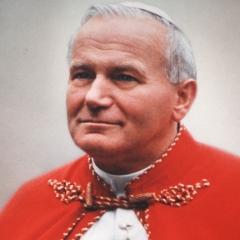
Pope John Paul II
Pope John Paul II

Pope John Paul II, born on May 18, 1920, and died on April 2, 2005, was the 266th Pope of the Roman Catholic Church and one of the longest-reigning popes in history. During his papacy from 1978 to 2005, he was dedicated to promoting world peace and unity, advancing church reform, and visiting numerous countries and regions. more

You May Also Like

“Simplicity in its essence demands neither a vow of poverty nor a life of rural homesteading. As an ethic of self-conscious material moderation, it can be practiced in cities and suburbs, townhouses and condominiums. It requires neither a log cabin nor a hairshirt but a deliberate ordering of priorities so as to distinguish between the necessary and superfluous, useful and wasteful, beautiful and vulgar.”

“So many sins against the poor cry out to high heaven! One of the most deadly sins is to deprive the laborer of his hire. There is another: to instill in him paltry desires so compulsive that he is willing to sell his liberty and his honor to satisfy them. We are all guilty of concupiscence, but newspapers, radios, television, and battalions of advertising men (woe to that generation!) deliberately stimulate our desires, the satisfaction of which so often means the degradation of the family.”

“The answers to the human problems of ecology are to be found in economy. And the answers to the problems of economy are to be found in culture and character. To fail to see this is to go on dividing the world falsely between guilty producers and innocent consumers.”

“The contemporary tendency in our society is to base our distribution on scarcity, which has vanished, and to compress our abundance into the overfed mouths of the middle and upper classes until they gag with superfluity. If democracy is to have breadth of meaning, it is necessary to adjust this inequity. It is not only moral, but it is also intelligent. We are wasting and degrading human life by clinging to archaic thinking.”

“The conversation of most middle-class Americans, we are told, revolves around consumption: what to buy, what was just bought, where to eat, the price of the neighbor's house, what's on sale this week, our clothes or someone else's, the best car on the market this year, where to spend a vacation. Apparently we can't stop eating, shopping, or consuming. Success is measured not in terms of love, wisdom, and maturity but by the size of one's pile of possessions.”

“The economy is still substantially that of the fur trade, still based on the same general kinds of commercial items: technology, weapons, ornaments, novelties, and drugs. The one great difference is that by now the revolution has deprived the mass of consumers of any independent access to the staples of life: clothing, shelter, food, even water. Air access remains the only necessity that the average user can still get for himself, and the revolution has imposed a heavy tax on that by way of pollution. Commercial conquest is far more thorough and final than military defeat.”