Quotessence
Home / Quotes / Quote by Lewis Howard Latimer

Quote by Lewis Howard Latimer

Author

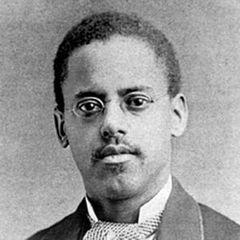
Lewis Howard Latimer

Lewis Howard Latimer was an African American inventor and engineer who made significant contributions to the development of the telegraph and the light bulb. He worked for the Edison Electric Light Company and is credited with improving the incandescent light bulb's filament. Latimer's work in the field of electrical engineering was pioneering and had a lasting impact on the industry. more

You May Also Like

“... one of the main functions of an analogy or model is to suggest extensions of the theory by considering extensions of the analogy, since more is known about the analogy than is known about the subject matter of the theory itself ... A collection of observable concepts in a purely formal hypothesis suggesting no analogy with anything would consequently not suggest either any directions for its own development.”

“Until now the theory of infinite series in general has been very badly grounded. One applies all the operations to infinite series as if they were finite; but is that permissible? I think not. Where is it demonstrated that one obtains the differential of an infinite series by taking the differential of each term? Nothing is easier than to give instances where this is not so.”

“All good intellects have repeated, since Bacon's time, that there can be no real knowledge but that which is based on observed facts. This is incontestable, in our present advanced stage; but, if we look back to the primitive stage of human knowledge, we shall see that it must have been otherwise then. If it is true that every theory must be based upon observed facts; it is equally true that facts can not be observed without the guidance of some theory. Without such guidance, our facts would be desultory and fruitless; we could not retain them: for the most part we could not even perceive them.”

“But, contrary to the lady's prejudices about the engineering profession, the fact is that quite some time ago the tables were turned between theory and applications in the physical sciences. Since World War II the discoveries that have changed the world are not made so much in lofty halls of theoretical physics as in the less-noticed labs of engineering and experimental physics. The roles of pure and applied science have been reversed; they are no longer what they were in the golden age of physics, in the age of Einstein, Schrödinger, Fermi and Dirac.”

“For if as scientists we seek simplicity, then obviously we try the simplest surviving theory first, and retreat from it only when it proves false. Not this course, but any other, requires explanation. If you want to go somewhere quickly, and several alternate routes are equally likely to be open, no one asks why you take the shortest. The simplest theory is to be chosen not because it is the most likely to be true but because it is scientifically the most rewarding among equally likely alternatives. We aim at simplicity and hope for truth.”