“My doctor said to me afterwards, 'When you were ill you behaved like a true philosopher. Every time you came to yourself you made a joke.' I never had a compliment that pleased me more.”
Quote by Bertrand Russell
Work
The Autobiography of Bertrand Russell: 1914-1944: 1914/1944
The Autobiography of Bertrand Russell: 1914-1944: 1914/1944 is a detailed narrative of Russell's life and thoughts, focusing on the years between 1914 and 1944. It offers insights into his experiences during World War I, his philosophical evolution, and his contributions to logic and mathematics. The book provides a candid look at Russell's personal life, including his relationships and his views on various social and political issues of the time. more
Author
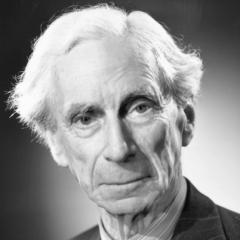
Bertrand Russell
Bertrand Russell was a British philosopher, mathematician, and logician born on May 18, 1872, and died on February 2, 1970. He is known for his contributions to logic and mathematics, particularly in the fields of mathematical logic and philosophical analysis. His works spanned a wide range of subjects, including ethics, political philosophy, history, and literary criticism. more
You May Also Like
“I have seldom seen much ostentation and much learning met together.”
Source: The Works of Joseph Hall: Devotional works; Miscellaneous theology
Source: The Very Best of Malcolm Muggeridge
Source: Tread softly, for you tread on my jokes
“Love is everything it's cracked up to be”
Source: Inventing Memory: A Novel of Mothers and Daughters