Quotessence
Home / Quotes / Quote by Biz Stone

Quote by Biz Stone

“What if the New York Times gave out free, cheap Kindles to everyone and said this is how we're doing it now. You know? Maybe that's a way to go. The technology gets cheaper and cheaper, and at some point it has to be cheaper than all these trucks and all this gas, to just say, let's give away a Kindle to everyone.”

Quote by Biz Stone

Author
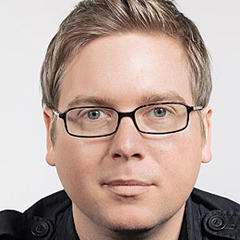
Biz Stone
Biz Stone

Biz Stone, born on March 10, 1974, is an American author known for his contributions to the social media industry. He is particularly recognized for his role in the founding and development of Twitter, a revolutionary social media platform that has transformed the way people access and share information. more

You May Also Like

“You don't have to spend the entire day hunched over your computer consuming this information. Maybe, it is as simple as once in a while glancing down at the device that's invaluable to you or many reasons, catching up, or it lets you know when you should know something. But as these things get better and we get more connected in it, it will get more sophisticated.”

“"Biblical theology" refers to something more precise than theology that is faithful to the Bible. It might be helpful to draw a contrast: at the risk of oversimplification, systematic theology tends to organize theology topically and with an eye cast on its contemporary relevance, while biblical theology tends to organize the same biblical material so that it is easier to see the distinctive contribution of each biblical book and human author, and to trace the trajectories of themes across the Bible so we see how the books of the Bible hold together.”

“Systematic theology will ask questions like "What are the attributes of God? What is sin? What does the cross achieve?" Biblical theology tends to ask questions such as "What is the theology of the prophecy of Isaiah? What do we learn from John's Gospel? How does the theme of the temple work itself out across the entire Bible?" Both approaches are legitimate; both are important. They are mutually complementary.”