Quotessence
Home / Quotes / Quote by Niccolo Machiavelli

Quote by Niccolo Machiavelli

“The people resemble a wild beast, which, naturally fierce and accustomed to live in the woods, has been brought up, as it were, in a prison and in servitude, and having by accident got its liberty, not being accustomed to search for its food, and not knowing where to conceal itself, easily becomes the prey of the first who seeks to incarcerate it again.”

Quote by Niccolo Machiavelli

Author
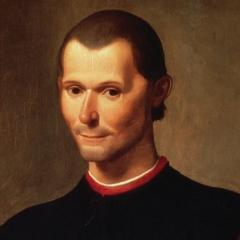
Niccolo Machiavelli
Niccolo Machiavelli

Niccolò Machiavelli was an Italian historian, political theorist, and philosopher who lived during the Renaissance. He is best known for his book 'The Prince,' which delves into the concepts of power, political tactics, and the art of rule. more

You May Also Like

“The reason is that nature has so created men that they are able to desire everything but are not able to attain everything: so that the desire being always greater than the acquisition, there results discontent with the possession and little satisfaction to themselves from it. From this arises the changes in their fortunes; for as men desire, some to have more, some in fear of losing their acquisition, there ensues enmity and war, from which results the ruin of that province and the elevation of another.”

“I assert once again as a truth to which history as a whole bears witness that men may second their fortune, but cannot oppose it; that they may weave its warp, but cannot break it. Yet they should never give up, because there is always hope, though they know not the end and more towards it along roads which cross one another and as yet are unexplored; and since there is hope, they should not despair, no matter what fortune brings or in what travail they find themselves.”

“The Romans never allowed a trouble spot to remain simply to avoid going to war over it, because they knew that wars don't just go away, they are only postponed to someone else's advantage. Therefore, they made war with Philip and Antiochus in Greece, in order not to have to fight them in Italy... They never went by that saying which you constantly hear from the wiseacres of our day, that time heals all things. They trusted rather their own character and prudence- knowing perfectly well that time contains the seeds of all things, good as well as bad.”

“A prince ought to have no other aim or thought, nor select anything else for his study, than war and its rules and discipline; for this is the sole art that belongs to him who rules, and it is of such force that it not only upholds those who are born princes, but it often enables men to rise from a private station to that rank. And, on the contrary, it is seen that when princes have thought more of ease than of arms they have lost their states. And the first cause of your losing it is to neglect this art; and what enables you to acquire a state is to be master of the art.”

“A prince, therefore, must not mind incurring the charge of cruelty for the purpose of keeping his subjects united and confident; for, with a very few examples, he will be more merciful than those who, from excess of tenderness, allow disorders to arise, from whence spring murders and rapine; for these as a rule injure the whole community, while the executions carried out by the prince injure only one individual. And of all princes, it is impossible for a new prince to escape the name of cruel, new states being always full of dangers.”

“Nevertheless, he must be cautious in believing and acting, and must not inspire fear of his own accord, and must proceed in a temperate manner with prudence and humanity, so that too much confidence does not render him incautious, and too much diffidence does not render him intolerant. From this arises the question whether it is better to be loved more than feared, or feared more than loved.”