Quotessence
Home / Quotes / Quote by Michael Faraday

Quote by Michael Faraday

Author

Michael Faraday
Michael Faraday

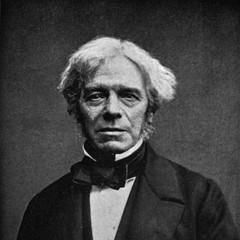
Michael Faraday was an English physicist and chemist, born on September 22, 1791, and died on August 25, 1867. He made significant contributions to the field of electromagnetism, particularly the discovery of electromagnetic induction, which had a profound impact on the development of the electric power industry and electrical engineering. more

You May Also Like

“If one in twenty does not seem high enough odds, we may, if we prefer it, draw the line at one in fifty (the 2 per cent. point), or one in a hundred (the 1 per cent. point). Personally, the writer prefers to set a low standard of significance at the 5 per cent. point, and ignore entirely all results which fail to reach this level. A scientific fact should be regarded as experimentally established only if a properly designed experiment rarely fails to give this level of significance.”

“In the following pages I offer nothing more than simple facts, plain arguments, and common sense; and have no other preliminaries to settle with the reader, than that he will divest himself of prejudice and repossession, and suffer his reason and feelings to determine for themselves; and that he will put on, or rather that he will not put off, the true character of man, and generously enlarge his view beyond the present day.”

“It seems to me that every phenomenon, every fact, itself is the really interesting object. Whoever explains it, or connects it with other events, usually only amuses himself or makes sport of us, as, for instance, the naturalist or historian. But a single action or event is interesting, not because it is explainable, but because it is true.”

“Modern masters of science are much impressed with the need of beginning all inquiry with a fact. The ancient masters of religion were quite equally impressed with that necessity. They began with the fact of sin-a fact as practical as potatoes. Whether or not man could be washed in miraculous waters, there was no doubt at any rate that he wanted washing.”

“Politicians, real-estate agents, used-car salesmen, and advertising copy-writers are expected to stretch facts in self-serving directions, but scientists who falsify their results are regarded by their peers as committing an inexcusable crime. Yet the sad fact is that the history of science swarms with cases of outright fakery and instances of scientists who unconsciously distorted their work by seeing it through lenses of passionately held beliefs.”