Quotessence
Home / Quotes / Quote by Louis Agassiz

Quote by Louis Agassiz

“Philosophers and theologians have yet to learn that a physical fact is as sacred as a moral principle. Our own nature demands from us this double allegiance.”

Quote by Louis Agassiz

Author
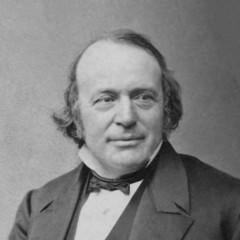
Louis Agassiz
Louis Agassiz

Louis Agassiz, born on May 28, 1807 in Switzerland and died on December 14, 1873 in the United States, was a renowned geologist in the 19th century. He made significant contributions to the fields of paleontology and geology. more

You May Also Like

“Politicians, real-estate agents, used-car salesmen, and advertising copy-writers are expected to stretch facts in self-serving directions, but scientists who falsify their results are regarded by their peers as committing an inexcusable crime. Yet the sad fact is that the history of science swarms with cases of outright fakery and instances of scientists who unconsciously distorted their work by seeing it through lenses of passionately held beliefs.”

“The air of caricature never fails to show itself in the products of reason applied relentlessly and without correction. The observation of clinical facts would seem to be a pursuit of the physician as harmless as it is indispensable. [But] it seemed irresistibly rational to certain minds that diseases should be as fully classifiable as are beetles and butterflies. This doctrine ... bore perhaps its richest fruit in the hands of Boissier de Sauvauges. In his Nosologia Methodica published in 1768 ... this Linnaeus of the bedside grouped diseases into ten classes, 295 genera, and 2400 species.”

“If you go forward in the spirit of the original apostles and followers of Jesus Christ, trusting not in man but in the living God, he will enable you to pull down the strong holds of sin and Satan, and that work by which he is pleased will prosper in your hands.”

“The love of experiment was very strong in him [Charles Darwin], and I can remember the way he would say, "I shan't be easy till I have tried it," as if an outside force were driving him. He enjoyed experimenting much more than work which only entailed reasoning, and when he was engaged on one of his books which required argument and the marshalling of facts, he felt experimental work to be a rest or holiday.”