Quotessence
Home / Quotes / Quote by Marc Ian Barasch

Quote by Marc Ian Barasch

“By and large, the Healing Dream is not the defender of our waking goals-material achievement, perfect romance, a modest niche in history-but an advocate-general for the soul, whose aims may be diametrically different... The nourishment of the dreamworld is a reciprocal affair: as we provide for it, it provides for us.”

Quote by Marc Ian Barasch

Author
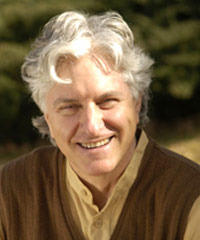
Marc Ian Barasch
Marc Ian Barasch

Marc Ian Barasch, born in 1949, is a renowned fictioneer. His works are known for their profound insights and unique narrative style, which have won him a dedicated readership. more

You May Also Like

“Friend, many and many a dream is mere confusion a cobweb of no consequence at all. Two gates for ghostly dreams there are: One gateway of honest horn, and one of ivory. Issuing by the ivory gate are dreams of glimmering illusion, fantasies, but those that come through solid polished horn may be borne out, if mortals only know them.”

“Many who know something but not enough about dreams and their meaning...are liable to succumb to the prejudice that the dream actually has a moral purpose, that it warns, rebukes, comforts, foretells the future, etc. If one believes that the unconscious always knows best, one can easily be betrayed into leaving the dreams to take the necessary decisions, and is then disappointed when the dreams become more and more trivial and meaningless...The unconscious functions satisfactorily only when the conscious mind fufills its task to the very limit.”

“All elongated objects, such as sticks, tree-trunks and umbrellas(the opening of these last being comparable to an erection) may stand for the male organ...Boxes, cases, chests, cupboards, and ovens represent the uterus...Rooms in dreams are usually women...Many landscapes in dreams, especially any containing breidges or wooded hills, may clearly be recognized as descriptions of the genitals.”

“Big dreams are risky business. The psyche can be fiendish, puckish, exalted, imperious, tender, sardonic, faithful, pestilential--whatever rivets our attention upon the task of psychic growth. It is not so hard to find at least a little sympathy for theologian Martin Luther, who prayed to God not to send him any dreams at all, fearful he could not distinguish between those of divine origin and those sent by the Devil.”

“This passion, so unordered and yet so potent, explains the capacity for teaching that one frequently observes in scientific men of high attainments in their specialties-for example, Huxley, Ostwald, Karl Ludwig, Virchow, Billroth, Jowett, William G. Sumner, Halsted and Osler-men who knew nothing whatever about the so-called science of pedagogy, and would have derided its alleged principles if they had heard them stated.”

“On the rare occasions when our dreams succeed and achieve perfection - most dreams are bungled - the are symbolic chains of scene and images in place of a narrative poetic language; they circumscribe our experiences or expectations or situations with such poetic boldness and decisiveness that in the morning we are always amazed when we remember our dreams.”