Quotessence
Home / Quotes / Quote by J. William Fulbright

Quote by J. William Fulbright

“Finally, the Program aims, through these means, to bring a little more knowledge, a little more reason, and a little more compassion into world affairs and thereby to increase the chance that nations will learn at last to live in peace and friendship.”

Quote by J. William Fulbright

Author
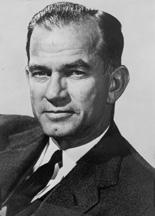
J. William Fulbright

J. William Fulbright was a prominent United States Senator from Arkansas, serving from 1945 to 1975. He is best known for establishing the Fulbright Program, which promotes international educational exchange. Fulbright was a member of the Democratic Party and was deeply committed to the principles of peace, education, and international understanding. more

You May Also Like

“The essence of intercultural education is the acquisition of empathy-the ability to see the world as others see it, and to allow for the possibility that others may see something we have failed to see, or may see it more accurately. The simple purpose of the exchange program...is to erode the culturally rooted mistrust that sets nations against one another. The exchange program is not a panacea but an avenue of hope.”

“It is in a way a mystery that, instead of demanding that their governments give primary attention to their own needs and aspirations, most of the citizens of big counties-those, that is, that have the status of being "powers" in the world-far from being self-centered or materialistic as they are commonly credited with being, the ordinary citizen and his elected representative all too often turn out to be romantics, ready and eager to sacrifice programs of health, education and welfare for the power and pride of the nation.”

“Educational exchange can turn nations into people, contributing as no other form of communication can to the humanizing of international relations. Man's capacity for decent behavior seems to vary directly with his perception of others as individual humans with human motives and feelings, whereas his capacity for barbarism seems related to his perception of an adversary in abstract terms, as the embodiment, that is, of some evil design or ideology.”

“The preservation of our free society in the years and decades to come will depend ultimately on whether we succeed or fail in directing the enormous power of human knowledge to the enrichment of our own lives and the shaping of a rational and civilized world order....It is the task of education, more than any other instrument of foreign policy to help close the dangerous gap between the economic and technological interdependence of the people of the world and their psychological, political and spiritual alienation.”

“With respect to the creation of the program, I introduced the bill in September 1945, immediately after the end of the war with Japan, in August of that year. A number of considerations, of course, entered into my decision to introduce the bill, growing from my own experience as a Rhodes scholar and the experiences our government had had with the first Word War debts, [Herbert] Hoover's efforts in establishing the Belgian-American Education Foundation after World War I, [and] the Boxer Rebellion indemnity.”