Quotessence
Home / Quotes / Quote by Johann Wolfgang von Goethe

Quote by Johann Wolfgang von Goethe

Work

Wilhelm Meister's Years of Travel or the Renunciants

This classic German novel delves into the adventures and experiences of Wilhelm Meister, a young man seeking knowledge and enlightenment. The narrative follows his travels and encounters with various characters, reflecting themes of education, art, and the pursuit of wisdom. more

Author
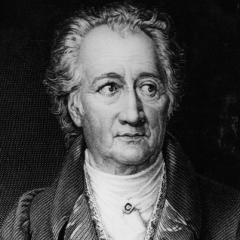
Johann Wolfgang von Goethe

Johann Wolfgang von Goethe, born on August 28, 1749, and died on March 22, 1832, was a prominent German writer, thinker, and scientist. He is one of the greatest writers in German literary history and his works have had a profound impact on the world. His most famous works include 'Faust' and 'The Sorrows of Young Werther'. more

You May Also Like

“I would have loved to have had the start that Tom Brady did, won a couple of Super Bowls early, but I wasn't good enough at the time. I have to get better. You start to understand that all the talk and noise really don't matter. Every quarterback goes through the same thing. You have to keep getting better; your team will keep getting better—and you'll have a chance.”

“The most superficial fact regarding the 'Discourses,' the fact that the number of its chapters equals the number of books of Livy's 'History,' compelled us to start a chain of tentative reasoning which brings us suddenly face to face with the only New Testament quotation that ever appears in Machiavelli's two books and with an enormous blasphemy.”

“The belief that value judgments are not subject, in the last analysis, to rational control, encourages the inclination to make irresponsible assertions regarding right and wrong or good and bad. One evades discussion of serious issues by the simple device of passing them off as value problems, whereas, to say the least, many of these conflicts arose out of man's very agreement regarding values.”

“Our understanding of the thought of the past is liable to be the more adequate, the less the historian is convinced of the superiority of his own point of view, or the more he is prepared to admit the possibility that he may have to learn something, not merely about the thinkers of the past, but from them.”

“When speaking of a "body of knowledge" or of "the results of research," e.g., we tacitly assign the same cognitive status to inherited knowledge and to independently acquired knowledge. To counteract this tendency a special effort is required to transform inherited knowledge into genuine knowledge by revitalizing its original discovery, and to discriminate between the genuine and the spurious elements of what claims to be inherited knowledge.”