“The most superficial fact regarding the 'Discourses,' the fact that the number of its chapters equals the number of books of Livy's 'History,' compelled us to start a chain of tentative reasoning which brings us suddenly face to face with the only New Testament quotation that ever appears in Machiavelli's two books and with an enormous blasphemy.”
Quote by Leo Strauss
Author
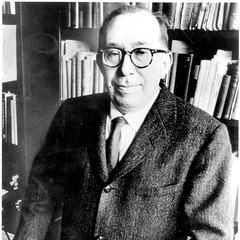
Leo Strauss
Leo Strauss was a prominent philosopher born on September 20, 1899, and died on October 18, 1973. His thoughts were deeply influenced by classical philosophy and German philosophy, especially by Martin Heidegger's philosophical ideas. Strauss's main contribution lies in his reinterpretation of political philosophy, emphasizing the close connection between political philosophy and moral philosophy. more
You May Also Like
Source: What is Political Philosophy? And Other Studies
Source: What is Political Philosophy? And Other Studies
Source: What is Political Philosophy? And Other Studies
Source: What is Political Philosophy? And Other Studies
“One must ask children and birds how cherries and strawberries taste.”
Source: Liberalism Ancient and Modern
“Life is too short to live with any but the greatest books.”
Source: Liberalism Ancient and Modern
Source: Liberalism Ancient and Modern
Source: Liberalism Ancient and Modern
Source: Liberalism Ancient and Modern