Quotessence
Home / Quotes / Quote by Mark Twain

Quote by Mark Twain

Work

The Complete Works of Mark Twain: All 13 Novels, Short Stories, Poetry and Essays

This collection offers a comprehensive compilation of Mark Twain's works, encompassing his renowned novels such as 'The Adventures of Tom Sawyer' and 'Adventures of Huckleberry Finn', alongside his shorter stories, poetry, and essays. It provides readers with a comprehensive view of Twain's wit, social commentary, and storytelling abilities. more

Author
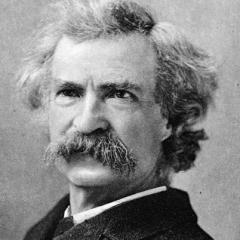
Mark Twain
Mark Twain

Mark Twain, born Samuel Langhorne Clemens, was a renowned American author and humorist in the 19th century. His works are characterized by humor, satire, and profound social insight, with notable novels such as 'The Adventures of Tom Sawyer' and 'The Adventures of Huckleberry Finn'. more

You May Also Like

“When Charles Darwin wrote The Origin Of The Species, no one could have known that the ice cap would melt, that the waters would rise and that life on earth would have to evolve in order to live beneath the sea once more or perish. We came from water and now, with the help of stem cell technology and cloning, we must go back to it to survive.When the waters rise, humanity will go back to the place from whence it came.Make no mistake, this is not sci-fi, this is evolution”

“Man is a transitory being, and his designs must partake of the imperfections of their author. To confer duration is not always in our power. We must snatch the present moment, and employ it well, without too much solicitude for the future, and content ourselves with reflecting that our part is performed. He that waits for an opportunity to do much at once, may breathe out his life in idle wishes, and regret, in the last hour, his useless intentions and barren zeal.”

“I have often thought that there has rarely passed a life of which a judicious and faithful narrative would not be useful; for not only every man has, in the mighty mass of the world, great numbers in the same condition with himself, to whom his mistakes and miscarriages, escapes and expedients, would be of immediate and apparent use; but there is such a uniformity in the state of man, considered apart from adventitious and separable decorations and disguises, that there is scarce any possibility of good or ill but is common to human kind.”

“It is natural for every man uninstructed to murmur at his condition, because, in the general infelicity of life, he feels his own miseries without knowing that they are common to all the rest of the species; and, therefore, though he will not be less sensible of pain by being told that others are equally tormented, he will at least be freed from the temptation of seeking, by perpetual changes, that ease which is no where to be found, and though his diseases still continue, he escapes the hazard of exasperating it by remedies.”

“The gratification which affluence of wealth, extent of power, and eminence of reputation confer, must be always, by their own nature, confined to a very small number; and the life of the greater part of mankind must be lost in empty wishes and painful comparisons, were not the balm of philosophy shed upon us, and our discontent at the appearances of unequal distribution soothed and appeased.”

“The great end of prudence is to give cheerfulness to those hours which splendour cannot gild, and acclamation cannot exhilarate; those soft intervals of unbended amusement, in which a man shrinks to his natural dimensions, and throws aside the ornaments or disguises which he feels in privacy to be useless incumbrances, and to lose all effect when they become familiar. To be happy at home is the ultimate result of all ambition, the end to which every enterprise and labour tends, and of which every desire prompts the prosecution.”