Quotessence
Home / Quotes / Quote by Terence McKenna

Quote by Terence McKenna

“Every culture that’s ever existed has operated under the illusion that it understood 95% of reality and that the other 5% would be delivered in the next 18 months, and from Egypt forward they’ve been running around believing they had a perfect grip on things and yet we look back at every society that preceded us with great smugness at how naive they all were. Well, it never occurs to us, then, that maybe we’re whistling in the dark too! That the universe is stranger than you CAN suppose, and that that openness that that perception imparts is a great joy, a great blessing, because then you can live your life not in service to some fascistic metaphor but in service to the living mystery: the fact that you’re not going to understand it; it is not going to yield to logic; or magic; or any other technique that’s been developed…”

Quote by Terence McKenna

Author
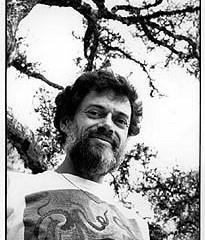
Terence McKenna
Terence McKenna

Terence McKenna was a renowned philosopher known for his profound insights into consciousness, botany, and human potential. His ideas were deeply influenced by his family's genetic research and studies on the evolution of human consciousness. more

You May Also Like

“Tossing out ideas itself was good. Stimulating the conference was something that should be welcomed. I didn’t mind if a formal brainstorm was chosen for the sake of presenting many ideas. But in the brainstorm and conference we were holding where nobody’s ideas were rejected, there was no foreseeable conclusion in sight. The conference I thought was proceeding on smoothly was beginning to look nonsensical. When I noticed, my hands recording the minutes had stopped. I loosely let my hands hang under the desk and sat there in silence watching the conference. The expression that I had was completely different from those who were energetically involved in the discussion. They had vivid and bright smiles floating on their faces. That was when I noticed. They were all enjoying this moment. That’s to say, they were enjoying this exchange between each other. What they wanted wasn’t the very idea of volunteer service, but the self­-acknowledgement of them doing these activities. It’s not that they wanted to do work. They just wanted to be immersed with the feeling of working. They just wanted to feel like they were actually doing it. And then, they would feel like they did everything that they could, where ultimately, everything had turned into nothing.”

“Raging crime, class warfare, invasive immigrants, light morals, public misbehavior. Always we convince ourselves that the parade of unwelcome and despised is a new phenomenon, which is why the phrase "the good old days" has passed from cliché to self-parody.”

“On the raptors kept for falconry: "They talk every night, deep into the darkness. They say about how they were taken, about what they can remember about their homes, about their lineage and the great deeds of their ancestors, about their training and what they've learned and will learn. It is military conversation, really, like what you might have in the mess of a crack cavalry regiment: tactics, small arms, maintenance, betting, famous hunts, wine, women, and song. Another subject they have is food. It is a depressing thought," he continued, "but of course they are mainly trained by hunger. They are a hungry lot, poor chaps, thinking of the best restaurants where they used to go, and how they had champagne and caviar and gypsy music. Of course, they all come from noble blood." "What a shame that they should be kept prisoners and hungry." "Well, they do not really understand that they are prisoners any more than the cavalry officers do. They look on themselves as being 'dedicated to their profession,' like an order of knighthood or something of that sort. You see, the member of the Muse [where Raptors are kept for falconry] is restricted to the Raptors, and that does help a lot. They know that none of the lower classes can get in. Their screened perches do not carry Blackbirds or such trash as that. And then, as for the hungry part, they're far from starving or that kind of hunger: they're in training, you know! And like everybody in strict training, they think about food.”