Quotessence
Home / Quotes / Quote by George Eliot

Quote by George Eliot

“Our sweet illusions are half of them conscious illusions, like effects of colour that we know to be made up of tinsel, broken glass and rags.”

Quote by George Eliot

Work

The Lifted Veil

This book delves into the enigmatic and the extraordinary, offering readers a glimpse into a world where the veil between the known and the unknown is lifted. more
Author

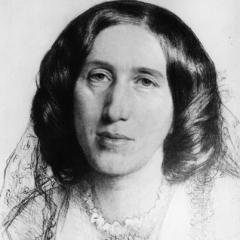
George Eliot
George Eliot

George Eliot, born Mary Ann Evans, was a renowned 19th-century British novelist. Her works are known for their profound psychological insights and critical exploration of social issues. With her unique narrative techniques and rich emotional expression, she has had a profound impact on literature. more

You May Also Like

“Tossing out ideas itself was good. Stimulating the conference was something that should be welcomed. I didn’t mind if a formal brainstorm was chosen for the sake of presenting many ideas. But in the brainstorm and conference we were holding where nobody’s ideas were rejected, there was no foreseeable conclusion in sight. The conference I thought was proceeding on smoothly was beginning to look nonsensical. When I noticed, my hands recording the minutes had stopped. I loosely let my hands hang under the desk and sat there in silence watching the conference. The expression that I had was completely different from those who were energetically involved in the discussion. They had vivid and bright smiles floating on their faces. That was when I noticed. They were all enjoying this moment. That’s to say, they were enjoying this exchange between each other. What they wanted wasn’t the very idea of volunteer service, but the self­-acknowledgement of them doing these activities. It’s not that they wanted to do work. They just wanted to be immersed with the feeling of working. They just wanted to feel like they were actually doing it. And then, they would feel like they did everything that they could, where ultimately, everything had turned into nothing.”

“Raging crime, class warfare, invasive immigrants, light morals, public misbehavior. Always we convince ourselves that the parade of unwelcome and despised is a new phenomenon, which is why the phrase "the good old days" has passed from cliché to self-parody.”

“On the raptors kept for falconry: "They talk every night, deep into the darkness. They say about how they were taken, about what they can remember about their homes, about their lineage and the great deeds of their ancestors, about their training and what they've learned and will learn. It is military conversation, really, like what you might have in the mess of a crack cavalry regiment: tactics, small arms, maintenance, betting, famous hunts, wine, women, and song. Another subject they have is food. It is a depressing thought," he continued, "but of course they are mainly trained by hunger. They are a hungry lot, poor chaps, thinking of the best restaurants where they used to go, and how they had champagne and caviar and gypsy music. Of course, they all come from noble blood." "What a shame that they should be kept prisoners and hungry." "Well, they do not really understand that they are prisoners any more than the cavalry officers do. They look on themselves as being 'dedicated to their profession,' like an order of knighthood or something of that sort. You see, the member of the Muse [where Raptors are kept for falconry] is restricted to the Raptors, and that does help a lot. They know that none of the lower classes can get in. Their screened perches do not carry Blackbirds or such trash as that. And then, as for the hungry part, they're far from starving or that kind of hunger: they're in training, you know! And like everybody in strict training, they think about food.”

“There are a great number of ego defenses, and the combinations and circumstances in which we use them reflect on our personality. Indeed, one could go so far as to argue that the self is nothing but the sum of its ego defenses, which are constantly shaping, upholding, protecting, and repairing it. The self is like a cracked mask that is in constant need of being pieced together. But behind the mask there is nobody at home.”