Quotessence
Home / Quotes / Quote by John Hay Beith

Quote by John Hay Beith

“Today a Scot is leading a British army in France [Field Marshall Douglas Haig], another is commanding the British Grand Fleet at sea [Admiral David Beatty], while a third directs the Imperial General Staff at home [Sir William Roberton]. The Lord Chancellor is a Scot [Viscount Finlay]; so are the Chancellor of the Exchequer and the Foreign Secretary [Bonar Law and Arthur Balfour]. The Prime Minister is a Welshman [David Lloyd George], and the First Lord of the Admiralty is an Irishman [Lord Carson]. Yet no one has ever brought in a bill to give home rule to England!”

Quote by John Hay Beith

Author
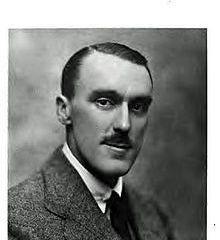
John Hay Beith
John Hay Beith

John Hay Beith was a distinguished British soldier, born on April 17, 1876, and died on September 22, 1952. He served in the British Army and achieved significant accomplishments during his military career. more

You May Also Like

“In virtually every Continental state at this time, aristocracies had to live with the risk that their property might be pillaged or confiscated. Only in Great Britain did it prove possible to float the idea that aristocratic property was in some magical and strictly intangible way the people's property also. The fact that hundreds of thousands of men and women today are willing to accept that privately owned country houses and their contents are part of Britain's national heritage is one more proof of how successfully the British elite reconstructed its cultural image in an age of revolution.”

“Recognising that an ostentatious cult of heroism and state service served an important propaganda function for the British elite does not mean, of course, that we should dismiss it as artificial or insincere. All aristocracies have a strong military tradition, and for many British patricians the protracted warfare of the period was a godsend. It gave them a job, and, more important, a purpose, an opportunity to carry out what they had been trained to do since childhood: ride horses, fire guns, exercise their undoubted physical courage and tell other people what to do.”

“For women to be supplying the soldiery with banners, flannel shirts and other material comforts was, superficially, all of a piece with their ministrations to their menfolk at home. Such contributions to the war effort were socially acceptable because they could be seen as an extension into the military sphere of the traditional female virtues of charity, nurture and needlework. Yet in reality what the women were doing represented the thin end of a far more radical wedge. Consciously or not, these female patriots were staking out a civic role for themselves. And many of them relished it.”

“In the wars against Revolutionary and Napoleonic France, as in so many later conflicts, British women seem to have been no more markedly pacifist than men. Instead, and exactly like so many of their male countrymen, some women found ways of combining support for the national interest with a measure of self-promotion. By assisting the war effort, women demonstrated that their concerns were by no means confined to the domestic sphere. Under cover of a patriotism that was often genuine and profound, they carved out for themselves a real if precarious place in the public sphere.”

“Ever since the Reformation, the case of legislation confining Catholics had been constructed primarily to protect a nervously Protestant against what was assumed to be a fifth column in its midst... Ministers believedm with some justice, that Catholics retained an attachment to their exiled co-religionists, the princes of the House of Stuart. After the Battle of Culloden had confirmed Jacobitism's insignificance, however, government attitudes towards Catholicism began perceptibly and logically to relax.”