Quotessence
Home / Quotes / Quote by Oscar Wilde

Quote by Oscar Wilde

“If after I am free a friend of mine gave a feast, and did not invite me to it, I should not mind a bit. I can be perfectly happy by myself. With freedom, flowers, books, and the moon, who could not be perfectly happy?”

Quote by Oscar Wilde

Work

De Profundis

De Profundis is a deeply personal and philosophical text that delves into the complexities of human emotions and the human condition. The author's exploration of love and betrayal is both intimate and profound, offering a unique perspective on spiritual and emotional turmoil. more
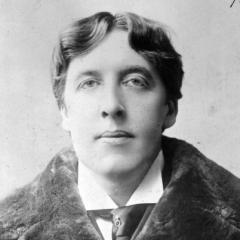
Author

Oscar Wilde
Oscar Wilde

Oscar Wilde, born on October 16, 1854, in Ireland, and died on November 30, 1900, was a renowned Irish writer, playwright, and poet. His works are known for their wit, satire, and unique style, with notable works including 'The Picture of Dorian Gray' and 'Lady Windermere's Fan'. more

You May Also Like

“Dear Mr. Right People say you don't exist. Yes, I agree no one is perfect but people can be right with all the imperfections and flaws. Can't they? So, You must know that I do believe in you. I do believe somewhere out there you do exist. Yesterday my friend told me that you aren't riding a White horse but the tortoise that is why you are taking eons to reach me. But that's okay with me, I don't have any preference for your choice of a commute as long as you are using Google Maps with me as your destination. You must have detoured a lot. Hope you had fun but now it's time we start our own adventure. So, reach soon. Yours Forever”

“A man cannot un-see the truth. He cannot willingly return to darkness or go blind once he has the gift of sight, anymore than he can be unborn. We are the only species capable of self-reflection. The only species with the toxin of self-doubt written into our genetic code. Unequal to our gifts we build, we buy, we consume. We wrap ourselves in the illusion of material success. We cheat and deceive as we claw our way to the pinnacle of what we define as achievement; superiority to other men. But there is a sickness inside us. Rising like the bile that leaves that bitter taste at the back of our throats. We do our best to deny its existence, dealing in lies and distraction. Until one day the body rebels against the mind and screams out… I am not a well man. Only when we know what ails us can we hope to find the cure.”

“In truth, I find the ocean unnerving. Too vast. I much prefer the forests around Stony Cross. They're always fascinating, and full of commonplace miracles... spiderwebs glittering with rain, new trees growing from the trunks of fallen oaks. I wish you could see them with me. And together we would listen to the wind rushing through the leaves overhead, a lovely swooshy melody... tree music!”

“Dear Mr. Beard, On the radio last spring, President Roosevelt said that each and every one of us here on the home front has a battle to fight; We must keep our spirits up. I am doing my best, but in my opinion Liver Gems are a lost cause, because they would take the spirit right out of anyone. So when Mother says it is wrong for us to eat better than our brave men overseas, I tell her that I don't see how eating disgusting stuff helps them in the least. But, Mr. Beard, it is very hard to cook good food when you're only a beginner! When Mother decided it was her patriotic duty to work at the airplane factory, she should have warned me about the recipes. You just can't trust them! Prudence Penny's are so revolting. I want to throw them right into the garbage. Mrs. Davis from next door lent me one of her wartime recipe pamphlets, and I read about liver salmi, which sounded so romantic. But by the time I had cooked the liver for twenty minutes in hot water, cut it into little cubes, rolled them in flour, and sautéed them in fat, I'd made flour footprints all over the kitchen floor. The consommé and cream both hissed like angry cats when I added them. Then I was supposed to add stoned olives and taste for seasoning. I spit it right into the sink.”

“Benjamin Munro was his name. She mouthed the syllables silently, Benjamin James Munro, twenty-six years old, late of London. He had no dependents, was a hard worker, a man not given to baseless talk. He'd been born in Sussex and grown up in the Far East, the son of archaeologists. He liked green tea, the scent of jasmine, and hot days that built towards rain. He hadn't told her all of that. He wasn't one of those pompous men who bassooned on about himself and his achievements as if a girl were just a pretty-enough face between a pair of willing ears. Instead, she'd listened and observed and gleaned, and, when the opportunity presented, crept inside the storehouse to check the head gardener's employment book. Alice had always fancied herself a sleuth, and sure enough, pinned behind a page of Mr. Harris's careful planting notes, she'd found Benjamin Munro's application. The letter itself had been brief, written in a hand Mother would have deplored, and Alice had scanned the whole, memorizing the bits, thrilling at the way the words gave depth and color to the image she'd created and been keeping for herself, like a flower pressed between pages. Like the flower he'd given her just last month. "Look, Alice"- the stem had been green and fragile in his broad, strong hand- "the first gardenia of the season.”