“The danger to which the success of revolutions is most exposed, is that of attempting them before the principles on which they proceed, and the advantages to result from them, are sufficiently seen and understood.”
Quote by Thomas Paine
Work
Rights of Man. Part the Second. Combining Principle and Practice
This work continues the arguments Paine began in the first part of Rights of Man, responding to Edmund Burke's critique of the French Revolution. The text systematically addresses the relationship between theoretical principles and their practical application in governance. Paine examines the origins of government, distinguishing between society as a natural construct and government as an artificial institution created for collective security. He critiques hereditary monarchy and aristocracy, proposing instead a representative system based on electoral accountability. The work addresses economic dimensions of rights, including arguments for progressive taxation, pensions for the elderly, and public education. Paine draws comparisons between the French and English political systems, analyzing the respective merits of written constitutions versus unwritten customary arrangements. The treatise engages with contemporary debates about revolution, legitimacy, and the scope of popular sovereignty, positioning these discussions within broader Enlightenment frameworks concerning human equality and political legitimacy. The publication history of this text includes significant controversy, with Paine facing prosecution for seditious libel in Britain, leading to his absence from the country during subsequent decades. The work circulated widely in multiple languages and influenced radical political movements across Europe and North America during the late eighteenth and early nineteenth centuries. more
Author
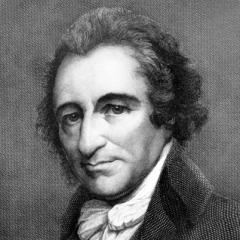
Thomas Paine
Thomas Paine, born on February 9, 1737, and died on June 8, 1809, was a prominent American writer, political figure, and philosopher during the American Revolutionary War. He is renowned for his radical democratic ideas and his contributions to the American independence movement. more
You May Also Like
Source: Maxims of Washington: Political, Social, Moral, and Religious
Source: Selected Addresses and Public Papers of Woodrow Wilson