Quotessence
Home / Quotes / Quote by Pope Dionysius

Quote by Pope Dionysius

“The Word of God makes use of poetic imagery when discussing... formless intelligences but... it does not do so for the sake of art, but as a concession to the nature of our own mind. It uses scriptural passages in an uplifting fashion as a way, provided for us from the first, to uplift our mind in a manner suitable to our nature.”

Quote by Pope Dionysius

Author
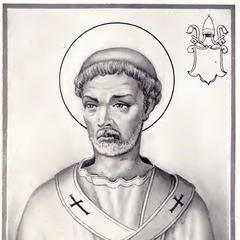
Pope Dionysius
Pope Dionysius

Pope Dionysius, the Bishop of Rome, died on December 26, 268. He was an important figure in the early Christian Church, having a profound impact on the organization and development of the Church. more

You May Also Like

“...angels... are always being filled full of light, becoming ever more radiant and making blessed use of their natural ability to change. They dance for joy around the First Light, look continuously towards Him and are enlightened directly by Him, as they tirelessly sing the praises of the Fount of light and, being ministers of light, transmit illuminating grace to those lower beings who are being enlightened.”

“...though every thinking being longs for God, the First Cause, it is powerless... to grasp Him. Tired with the yearning it chafes at the bit and, careless of the cost, it tries a second tack. Either it looks at things visible and makes of these a god - a gross mistake, for what visible thing is more sublime, more godlike, than its observer... - or else it discovers God through the beauty and order of things seen, using sight as a guide to what transcends sight without losing God through the grandeur of what it sees.”

“No one seeing a beautifully elaborated lyre with its harmonious, orderly arrangement, and hearing the lyre's music will fail to form a notion of its craftsman-player, to recur to him in thought though ignorant of him by sight. In this way the creative power, which moves and safeguards its objects, is clear to us, though it be not grasped by the understanding. Anyone who refuses to progress this far in following instinctive proofs must be wanting in judgment. But still, whatever we imagined or figured to ourselves or reason delineated is not the reality of God.”

“If... God highly exalted Christ because He humbled Himself, suffered dishonour, was tempted and endured a shameful cross and death for our sake, how will He save, glorify and raise us up if we neither choose humility, nor show love to our fellows, nor gain our souls by enduring temptation (cf. Lk. 21:19), nor follow the saving Guide through the 'strait gate' and along the 'narrow way' leading to eternal life (Mt. 7:14)? To this end we were called, says Peter, the chief Apostle, ' Because Christ also suffered for us, leaving us an example that we should follow His steps' (I Pet. 2:21).”