“We are learning that a standard of social ethics is not attained by travelling a sequestered byway, but by mixing on the thronged and common road where all must turn out for one another, and at least see the size of one another's burdens.”
Quote by Jane Addams
Work
Democracy and Social Ethics
This book delves into the philosophical and practical aspects of how democratic governance can be aligned with ethical standards, examining the moral implications of political decisions and societal policies. more
Author
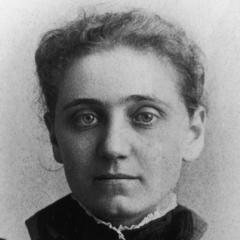
Jane Addams
Jane Addams, an American sociologist, was born on September 6, 1860, and died on May 21, 1935. She was a pioneer in the American social reform movement, known for her focus on the impoverished neighborhoods of Chicago's South Side. Addams was the first woman to win the Nobel Peace Prize, and her work had a profound impact on improving social services and promoting social justice. more
You May Also Like
Source: The Jane Addams Reader
Source: Democracy and Social Ethics
Source: Democracy and Social Ethics
Source: The Selected Papers of Jane Addams: Vol. 2: Venturing into Usefulness
Source: Twenty Years at Hull-House: With Autobiographical Notes
Source: The Jane Addams Reader
Source: Twenty Years at Hull-House, with Autobiographical Notes, by Jane Addams. With a Foreword by Henry Steele Commager, Drawings by Norah Hamilton
Source: Democracy and Social Ethics
Source: Twenty Years at Hull-House: With Autobiographical Notes