Quotessence
Home / Quotes / Quote by Emily Bronte

Quote by Emily Bronte

Author

Emily Bronte
Emily Bronte

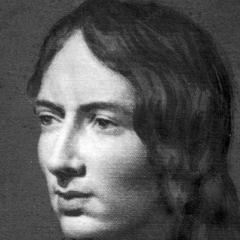
Emily Brontë was an English novelist, best known for her only novel, 'Wuthering Heights,' which is considered a classic of English literature. The novel is renowned for its profound emotion and unique narrative style. Born on July 30, 1818, she tragically passed away on December 19, 1848. more

You May Also Like

“So it is best to keep an open mind and be agnostic. At first sight that seems an unassailable position, at least in the weak sense of Pascal's wager. But on second thoughts it seems a cop-out, because the same could be said of Father Christmas and tooth fairies. There may be fairies at the bottom of the garden. There is no evidence for it, but you can't prove that there aren't any, so shouldn't we be agnostic with respect to fairies?”

“Do we really want to travel in hermetically sealed popemobiles through the rural provinces of France, Mexico and the Far East, eating only in Hard Rock Cafes and McDonalds? Or do we want to eat without fear, tearing into the local stew, the humble taqueria's mystery meat, the sincerely offered gift of a lightly grilled fish head? I know what I want. I want it all. I want to try everything once.”

“Indeed, religion allows people to imagine that their concerns are moral when they are highly immoral - that is, when pressing these concerns inflicts unnecessary and appalling suffering on innocent human beings. This explains why Christians like yourself expend more "moral" energy opposing abortion than fighting genocide. It explains why you are more concerned about human embryos than about the lifesaving promise of stem-cell research. And it explains why you can preach against condom use in sub-Saharan Africa while millions die from AIDS there each year. (25)”

“Do you talk by rule, then, while you are dancing?" Sometimes. One must speak a little, you know. It would look odd to be entirely silent for half an hour together, and yet for the advantage of some, conversation ought to be so arranged as that they may have the trouble of saying as little as possible.”