Quotessence
Home / Quotes / Quote by Joseph Henry Shorthouse

Quote by Joseph Henry Shorthouse

Work

John Ingelsant [by J.H. Shorthouse].

John Ingelsant is a historical novel that delves into the life of its protagonist, John Ingelsant, during the Victorian era. The story is rich with descriptions of the English countryside and features elements of romance and adventure. more

Author
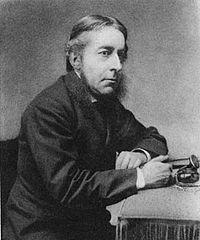
Joseph Henry Shorthouse

Joseph Henry Shorthouse was a British novelist born on September 9, 1834, and died on March 4, 1903. His works are known for their depiction of social reality and character psychology, with notable novels including 'Peter Augustus' and 'Elizabeth Ryder'. more

You May Also Like

“So many Muslims have this belief that everything between the two covers of the Koran is just God's unaltered word. They like to quote the textual work that shows the Bible has a history and did not fall straight out of the sky, but until now the Koran has been out of this discussion. The only way to break through this wall is to prove that the Koran has a history too. The Sana'a fragments will help us do that.”

“My idea is that the Koran is a kind of cocktail of texts that were not all understood even at the time of Muhammad. Many of them may even be a hundred years older than Islam itself. Even within Islamic traditions there is a huge body of contradictory information, including a significant Christian substrate; one can derive a whole Islamic anti-history from them if one wants.”

“...the history of early-medieval Arabia is nearly all legend. Like Buddha, Confucius, Jesus, and other founders of patriarchal religions, Mohammed lacks real verification. There is no reliable information about his life or teachings. Most stories about him are as apocryphal as the story that his coffin hangs forever in mid-air "between heaven and earth," like the bodies of ancient sacred kings.”

“[The canonization of the Koran involved the] attribution of several, partially overlapping, collections of logia [sayings] (exhibiting a distinctly Mosaic imprint) to the image of a Biblical prophet (modified by the material of the Muhammadan evangelium into an Arabian man of God) with a traditional message of salvation (modified by the influence of Rabbinic Judaism into the unmediated and finally immutable word of God).”

“...the prominent Egyptian government minister, university professor, and writer Taha Hussein...devoted himself to the study of pre-Islamic Arabian poetry and ended up concluding that much of that body of work had been fabricated well after the establishment of Islam in order to lend outside support to Koranic mythology.... [T]he Iranian journalist and diplomat Ali Dashti...repeatedly took his fellow Muslims to task for not questioning the traditional accounts of Muhammad's life, much of which he called myth-making and miracle-mongering.”