“One man alone had really known the sciences, namely, Robert, Bishop of Lincoln.”
Quote by Roger Bacon
Author
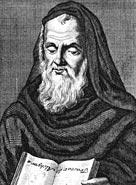
Roger Bacon
Roger Bacon (c. 1214–1294) was an English Franciscan friar, philosopher, and early advocate of the scientific method. He emphasized empirical observation and mathematics as essential tools for understanding nature. Educated at Oxford and the University of Paris, Bacon was influenced by Aristotle and Arabic science. His major work, Opus Majus, covered optics, linguistics, astronomy, and alchemy, and included descriptions of gunpowder and futuristic inventions like flying machines. Despite facing suspicion and imprisonment by church authorities for his unconventional ideas, Bacon's contributions laid groundwork for the later Scientific Revolution. He is remembered as a pioneering thinker who challenged dogma and championed experimental science. more
You May Also Like
“There probably is a God. Many things are easier to explain if there is than if there isn't.”
Source: The Neumann Compendium
Source: Stories and Legends
“The works of the great artists are silent books of eternal truths.”
Source: Parables of Sun Light: Observations on Psychology, the Arts, and the Rest