Quotessence
Home / Quotes / Quote by Hermann Hesse

Quote by Hermann Hesse

Work

Siddhartha: An Indian Tale

This classic work delves into the life of Siddhartha, a young Brahmin who seeks enlightenment and wisdom, leaving his family and societal expectations behind. The narrative follows his quest for spiritual truth, leading him through various teachings and experiences, ultimately leading to his own unique path of self-discovery. more

Author
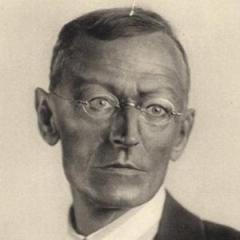
Hermann Hesse
Hermann Hesse

Hermann Hesse was a German poet and novelist, born on July 2, 1877, and died on August 9, 1962. Known for his profound psychological descriptions and exploration of human nature, his works include classics such as 'Steppenwolf' and 'The Glass Bead Game'. more

You May Also Like

“Most men are followers, and implicitly rely upon the judgment of others. They mistake solemnity for wisdom, and regard a grave countenance as the title page and Preface to a most learned volume. So they are easily imposed upon by forms, strange garments, and solemn ceremonies. And when the teaching of parents, the customs of neighbors, and the general tongue approve and justify a belief or creed, no matter how absurd, it is hard even for the strongest to hold the citadel of his soul. In each country, in defence of each religion, the same arguments would be urged.”

“In questions of law or of fact conscience is very often confounded with opinion. No man's conscience can tell him the rights of another man; they must be known by rational investigation or historical inquiry.”

“To live his life in his own way, to call his house his castle, to enjoy the fruits of his own labour, to educate his children as his conscience directs, to save for their prosperity after his death -- these are wishes deeply ingrained in civilised man. Their realization is almost as necessary to our virtues as to our happiness. From their total frustration disastrous results both moral and psychological might follow.”

“I am beginning to realize that "sanity" is no longer a value or an end in itself. The "sanity" of modern man is about as useful to him as the huge bulk and muscles of the dinosaur. If he were a little less sane, a little more doubtful, a little more aware of his absurdities and contradictions, perhaps there might be a possibility of his survival.”