Quotessence
Home / Quotes / Quote by Hermann Hesse

Quote by Hermann Hesse

“I realize that some people will not believe that a child of little more than ten years is capable of having such feelings. My story is not intended for them. I am telling it to those who have a better knowledge of man. The adult who has learned to translate a part of his feelings into thoughts notices the absence of these thoughts in a child, and therefore comes to believe that the child lacks these experiences, too. Yet rarely in my life have I felt and suffered as deeply as at that time.”

Quote by Hermann Hesse

Author
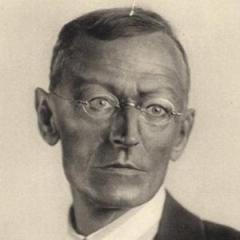
Hermann Hesse
Hermann Hesse

Hermann Hesse was a German poet and novelist, born on July 2, 1877, and died on August 9, 1962. Known for his profound psychological descriptions and exploration of human nature, his works include classics such as 'Steppenwolf' and 'The Glass Bead Game'. more

You May Also Like

“A land not mine, still forever memorable, the waters of its ocean chill and fresh. Sand on the bottom whiter than chalk, and the air drunk, like wine, late sun lays bare the rosy limbs of the pinetrees. Sunset in the ethereal waves: I cannot tell if the day is ending, or the world, or if the secret of secrets is inside me again.”

“Don't argue for other people's weaknesses. Don't argue for your own. When you make a mistake, admit it, correct it, and learn from it / immediately.”

“Science fiction is a dialogue, a tennis match, in which the Idea is volleyed from one side of the net to the other. Ridiculous to say that someone 'stole' an idea: no, no, a thousand times no. The point is the volley, and how it's carried, and what statement is made by the answering 'statement.' In other words — if Burroughs initiates a time-gate and says it works randomly, and then Norton has time gates confounded with the Perilous Seat, the Siege Perilous of the Round Table, and locates it in a bar on a rainy night — do you see both the humor and the volley in the tennis match?”

“I am not sure what lonliness is," she said. "If it is not literally being solitary, is it the fear of solitude, of being alone with oneself? I feel no such fear. I like being alone." "What do you fear then?" he asked her. She glanced briefly at him and smiled, a fragile expression that spoke for itself even before she found words. "Never finding myself again.”