Quotessence
Home / Quotes / Quote by Friedrich Nietzsche

Quote by Friedrich Nietzsche

“Morality makes stupid.- Custom represents the experiences of men of earlier times as to what they supposed useful and harmful - but the sense for custom (morality) applies, not to these experiences as such, but to the age, the sanctity, the indiscussability of the custom. And so this feeling is a hindrance to the acquisition of new experiences and the correction of customs: that is to say, morality is a hindrance to the development of new and better customs: it makes stupid.”

Quote by Friedrich Nietzsche

Work

Nietzsche: Daybreak: Thoughts on the Prejudices of Morality

This book delves into the philosophical critique of traditional moral values, examining the origins and implications of moral beliefs from a unique perspective. more

Author
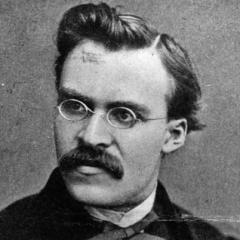
Friedrich Nietzsche
Friedrich Nietzsche

Friedrich Nietzsche was a German philosopher, cultural critic, poet, and writer whose works have had a profound impact on subsequent philosophy, literature, and thought. His ideas revolve around concepts such as the 'will to power', the 'Übermensch', and the 'eternal recurrence'. more

You May Also Like

“Whoever has overthrown an existing law of custom has always first been accounted a bad man: but when, as did happen, the law could not afterwards be reinstated and this fact was accepted, the predicate gradually changed; - history treats almost exclusively of these bad men who subsequently became good men!”

“... hitherto we have been permitted to seek beauty only in the morally good - a fact which sufficiently accounts for our having found so little of it and having had to seek about for imaginary beauties without backbone! - As surely as the wicked enjoy a hundred kinds of happiness of which the virtuous have no inkling, so too they possess a hundred kinds of beauty; and many of them have not yet been discovered.”

“It is, indeed, a fact that, in the midst of society and sociability every evil inclination has to place itself under such great restraint, don so many masks, lay itself so often on the procrustean bed of virtue, that one could well speak of a martyrdom of the evil man. In solitude all this falls away. He who is evil is at his most evil in solitude: which is where he is at his best - and thus to the eye of him who sees everywhere only a spectacle also at his most beautiful.”

“Where the good begins.- Where the poor power of the eye can no longer see the evil impulse as such because it has become too subtle, man posits the realm of goodness; and the feeling that we have now entered the realm of goodness excites all those impulses which had been threatened and limited by the evil impulses, like the feeling of security, of comfort, of benevolence. Hence, the duller the eye, the more extensive the good. Hence the eternal cheerfulness of the common people and of children. Hence the gloominess and grief - akin to a bad conscience - of the great thinkers.”

“Quality is never an accident; it is always the result of high intention, sincere effort, intelligent direction and skillful execution; it represents the wise choice of many alternatives, the cumulative experience of many masters of craftsmanship. Quality also marks the search for an ideal after necessity has been satisfied and mere usefulness achieved.”