Quotessence
Home / Quotes / Quote by Marilynne Robinson

Quote by Marilynne Robinson

“I think the connection between poetry and theology, which is profound in Western tradition - there is a great deal of wonderful religious poetry - both poetry and theology push conventional definitions and explore perceptions that might be ignored or passed off as conventional, but when they are pressed yield much larger meanings, seem to be part of a much larger system of reality.”

Quote by Marilynne Robinson

Author
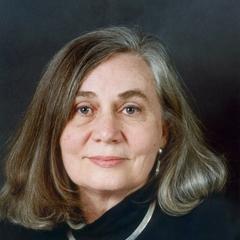
Marilynne Robinson
Marilynne Robinson

Marilynne Robinson is an American novelist known for her profound religious and moral themes. Her works often explore personal faith, social justice, and human relationships, earning her widespread acclaim. Born on November 26, 1943, Robinson's novels 'Gilead' and 'Housekeeping' have received extensive praise. more

You May Also Like

“One of the things that is nice about these old pastors - they were young at the time - who went into the Middle West is that they were real humanists. They were often linguists, for example, and the schools that they established were then, as they are now, real liberal arts colleges where people studied the humanities in a very broad sense. I think that should be reflected in his mind; appropriately, it is.”

“A sermon is a form that yields a certain kind of meaning in the same way that, say, a sonnet is a form that deals with a certain kind of meaning that has to do with putting things in relation to each other, allowing for the fact of complexity reversal, such things. Sermons are, at their best, excursions into difficulty that are addressed to people who come there in order to hear that.”

“A sermon is a valuable thing now and so impressive when you do hear a good one - and there is a lot of failure in the attempt; it's a difficult form - is because it's so seldom true now that you hear people speak under circumstances where they assume they are obliged to speak seriously and in good faith, and the people who hear them are assumed to be listening seriously and in good faith.”

“One of the things that is wonderful about hymns is that they are a sort of universally shared poetry, at least among certain populations. There isn't much of that anymore either. There are very few poems people can recite, but there are quite a few hymns that, if you hum a few bars, people can at least come up with two verses. Many of the older hymns are very beautiful.”

“Isaac Watts, of course, is a hymn writer in the tradition of Congregationalism who lived in the seventeenth and early eighteenth century. He is very interesting and important because he was also a metaphysician. He knew a great deal about what was, for him, contemporary science. He was very much influenced by Isaac Newton, for example. There are planets and meteors and so on showing up in his hymns very often. But, again, the scale of his religious imagination corresponds to a very generously scaled scientific imagination.”

“Protestantism, of course, is much more explicitly divided into different traditions - the Pentecostals, the Anglicans. But there is the main tradition of Protestantism that comes out of the Reformation and that produced people like Kant and Hegel and so on, who are not normally thought of as being people writing in a theological tradition, although Hegel, of course, wrote theology his whole life.”

“When the Reformation became established, one of the things that was a question between Catholicism and the Reformation traditions was whether there was a hierarchy of being. If you look at Thomas Aquinas, for example, you have hierarchies of angels and all the rest of it, and hierarchies even of saints and then subsaints - people who aren't quite there, that sort of thing. The Reformation rejected all of that and created a new metaphysics, in effect, that is not hierarchical.”