“Don't look at me so sorrowfully and so disapprovingly, dearest. I can't be sober and serious - everything looks so rosy and rainbowy to me.”
Quote by Lucy Maud Montgomery
Work
Delphi Complete Works of L. M. Montgomery (Illustrated)
The Delphi Complete Works of L. M. Montgomery (Illustrated) is a comprehensive compilation of the author's extensive literary output. It features her classic novels such as 'Anne of Green Gables' and 'Rilla of Ingleside,' as well as her poetry and other writings. Each work is accompanied by illustrations, enhancing the reader's experience and providing a visual representation of Montgomery's vivid imagination and storytelling. more
Author
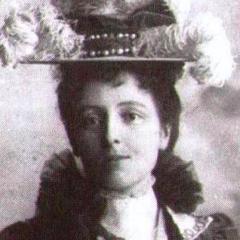
Lucy Maud Montgomery
Lucy Maud Montgomery was a Canadian author renowned for her children's literature, particularly the 'Anne of Green Gables' series. Her works are celebrated for their refreshing style and profound insights into human nature. more
You May Also Like
Source: Rilla of Ingleside
“Rilla's heart skipped a beat — or, if that be a physiological impossibility, she thought it did.”
Source: LUCY MAUD MONTGOMERY - The Woman Behind The Books: Autobiography & Private Letters (Including The Complete Anne of Green Gables Series, Emily Starr Trilogy & The Blue Castle): The Alpine Path (Memoirs), Complete Chronicles of Avonlea, The Story Girl, The Golden Road, Jane of Lantern Hill, Rainbow Valley, Emily of New Moon and more
“If one cannot learn from the mistakes of others, one might as well become a Democrat.”
Source: My Big Fat Supernatural Wedding
Source: Night Pleasures/Night Embrace
Source: The Grapes of Wrath
Source: A Susan Sontag reader
Source: Choke: A Novel
“I used rebellion as a way to hide out. We use criticism as a fake participation.”
Source: Choke