“When we entered a classroom we always tossed our caps on the floor, to free our hands; as soon as we crossed the threshold we would throw them under the bench so hard that they struck the wall and raised a cloud of dust; this was "the way it should be done." But the new boy either failed to notice this maneuver or was too shy to perform it himself, for he was still holding his cap on his lap at the end of the prayer. It was a head-gear of composite nature, combining elements of the busby, the lancer cap, the round hat, the otter-skin cap and the cotton nightcap--one of those wretched things whose mute ugliness has great depths of expression, like an idiot's face. Egg-shaped and stiffened by whalebone, it began with three rounded bands, followed by alternating diamond-shaped patches of velvet and rabbit fur separated by a red stripe, and finally there was a kind of bag terminating in a cardboard-lined polygon covered with complicated braid. A network of gold wire was attached to the top of this polygon by a long, extremely thin cord, forming a kind of tassel. The cap was new; its visor was shiny. "Stand up," said the teacher. He stood up; his cap fell. The whole class began to laugh. He bent down and picked it up. A boy beside him knocked it down again with his elbow; he picked it up once again. "Will you please put your helmet away?" said the teacher, a witty man.”
Quote by Gustave Flaubert
Work
Gustave Flaubert's Madame Bovary is a seminal work of 19th-century French literature. The novel follows the life of Emma Bovary, a woman who is discontent with her provincial life and marries Charles Bovary, a dull and unambitious country doctor. Emma's dissatisfaction leads her to seek fulfillment through romantic escapades and extramarital affairs, ultimately leading to disaster. Flaubert's meticulous attention to detail and his exploration of themes such as social class, materialism, and the human condition have made this novel a classic of world literature. more
Author
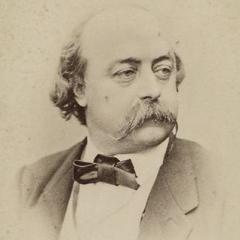
Gustave Flaubert, born on December 12, 1821 and died on May 8, 1880, was a prominent French writer of the 19th century. Known for his exquisite literary skills and profound psychological portrayals, Flaubert is best remembered for his masterpiece 'Madame Bovary'. more
You May Also Like
“I've spent most of my life feeling like a checker in the chess set”
“I just know you're a good man," she said desperately. "You're not a bit common!”