Quotessence
Home / Quotes / Quote by Dorotheus of Gaza

Quote by Dorotheus of Gaza

“By accepting a suspicion against the neighbor, by saying, 'What does it matter if I put in a word about my suspicion? What does it matter if I find out what my brother is saying or what a guest is doing?' the mind begins to forget about its own sins and to talk idly about his neighbor, speaking evil against him, despising him, and from this he falls into the very thing he condemns. Because we become careless about our own faults and do not lament our own death, we lose the power to correct ourselves and we are always at work on our neighbor.”

Quote by Dorotheus of Gaza

Author
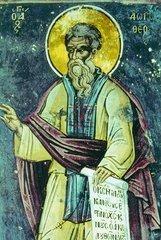
Dorotheus of Gaza
Dorotheus of Gaza

Dorotheus of Gaza (505-565 AD) was an influential Christian theologian and abbot. His life and achievements are shrouded in some mystery, but his writings hold significant importance in the field of Christian theology. more

You May Also Like

“When the devil looks at a man who sincerely desires not to sin, he is not so unintelligent as to suggest to him (as he would to a hardened sinner) that he go and commit fornication or go and steal. He knows we do not want that and he does not set out to tell us something we do not want to hear; but he finds out that little bit of self-will or self-righteousness and through that, with the appearance of well doing, he will do us harm.”

“If one of you sees, sometime, something unedifying and so much as goes on to pass it on and put it into the heart of another brother, in doing so you not only harm yourself but you harm your brother by putting one more little bit of knavery into his heart. Even if that brother has his mind set on prayer or some other noble activity, and the first arrives and furnishes him with something to prate about, he not only impedes what he ought to be doing, but brings a temptation on him. There is nothing graver or more deadly than this doing harm, not only to himself but also to his neighbor.”

“Self-indulgence takes many forms. A man may be self-indulgent in speech, in touch, in sight. From self-indulgence a man comes to idle speech and worldly talk, to buffoonery and cracking indecent jokes. There is self-indulgence in touching without necessity, making mocking signs with the hands, pushing for a place, snatching up something for oneself, approaching someone else shamelessly. All these things come from not having the fear of God in the soul and from these a man comes little by little to perfect contempt.”

“Only the Holy Spirit can purify the intellect, for unless a greater power comes and overthrows the despoiler, what he has taken captive will never be set free (cf. Lk. 11:21-22). In every way, therefore, and especially through peace of soul, we must make ourselves a dwelling-place for the Holy Spirit.”

“Sin is one thing but instinctive reaction or passion is another. These are our reactions: pride, anger, sexual indulgence, hate, greed, and so on. The corresponding sins are the gratification of these passions: when a man acts and brings into corporeal reality those works which were suggested to him by his desires. It is impossible to exist without desires arising, but not to give way to them is by no means impossible.”

“What brings us to perfection? An ingrained faith in God, the 'faith that makes real the things for which we hope' (Heb. 11:1), the faith whereby Abel offered to God a better sacrifice than Cain and was commended as righteous (cf. Heb 11:4). It is such faith that fills those assiduous in the search for truth with great aspiration for the exalted gifts of God, and leads them to the spiritual knowledge of created beings; and it pours into their hearts the inexhaustible treasures of the Spirit.”

“It is well known that obedience is the chief among the initiatory virtues, for first it displaces presumption and then it engenders humility within us. Thus it becomes, for those who willingly embrace it, a door leading to the love of God? Thus humility should be the first concern of those who are fighting against the presumption of the devil, for as we advance it will be a sure guide to all the paths of virtue.”