Quotessence
Home / Quotes / Quote by Raimon Panikkar

Quote by Raimon Panikkar

“I left Europe [for India] as a Christian, I discovered I was a Hindu and returned as a Buddhist without ever having ceased to be a Christian.”

Quote by Raimon Panikkar

Author
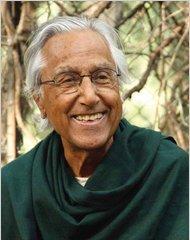
Raimon Panikkar
Raimon Panikkar

Raimon Panikkar was a renowned Indian theologian, philosopher, and writer. Born on November 2, 1918, and passing away on August 26, 2010, he was known for his contributions to inter-religious dialogue and cross-cultural studies. more

You May Also Like

“Each thing organizes the space around it, rebuffing or sidling up against other things; each thing calls, gestures, beckons to other beings or battles them for our attention; things expose themselves to the sun or retreat among the shadows, shouting with their loud colors or whispering with their seeds; rocks snag lichen spores from the air and shelter spiders under their flanks; clouds converse with the fathomless blue and metamorphose into one another; they spill rain upon the land, which gathers in rivulets and carves out canyons.”

“A particular place in the land is never, for an oral culture, just a passive or inert setting for the human events that occur there. It is an active participant in those occurrences. Indeed, by virtue of its underlying and enveloping presence, the place may even be felt to be the source, the primary power that expresses itself through the various events that unfold there.”

“Touch is a reciprocal action, a gesture of exchange with the world. To make an impression is also to receive one, and the soles of our feet, shaped by the surfaces they press upon, are landscapes themselves with their own worn channels and roving lines. They perhaps most closely resemble the patterns of ridge and swirl revealed when a tide has ebbed over flat sand”

“At the center, where a cuckoo bird would live in a more traditional timepiece, is the juggler. Dressed in harlequin style with a grey mask, he juggles shiny silver balls that correspond to each hour. As the clock chimes, another ball joins the rest until at midnight he juggles twelve balls in a complex pattern. After midnight the clock begins once more to fold in upon itself. The face lightens and the clouds return. The number of juggled balls decreases until the juggler himself vanishes. By noon it is a clock again, and no longer a dream.”