Quotessence
Home / Quotes / Quote by J. R. R. Tolkien

Quote by J. R. R. Tolkien

Work

The Hobbit

J.R.R. Tolkien's 'The Hobbit' is a fantasy novel that introduces readers to Middle-earth, the world that would later become the setting for 'The Lord of the Rings' series. The story follows Bilbo Baggins, a hobbit who is inadvertently drawn into a quest to reclaim the Dwarves' treasure from the dragon Smaug. Along the way, Bilbo encounters various magical creatures and faces numerous challenges, all while discovering his own courage and unexpected heroism. more
Author

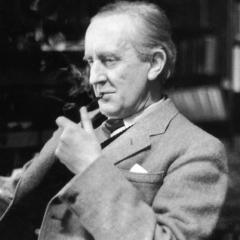
J. R. R. Tolkien
J. R. R. Tolkien

J.R.R. Tolkien was an English writer, best known for his fantasy literature, most notably The Lord of the Rings trilogy and The Hobbit. His works have had a profound impact on modern fantasy literature. more

You May Also Like

“Perhaps a creature of so much ingenuity and deep memory is almost bound to grow alienated from his world, his fellows, and the objects around him. He suffers from a nostalgia for which there is no remedy upon earth except as it is to be found in the enlightenment of the spirit--some ability to have a perceptive rather than an exploitive relationship with his fellow creatures.”

“Power, true power, comes from the belief in true things, and the willingness to stand behind that belief, even if the universe itself conspires to thwart your plans. Chaos may settle; flames may die; worlds may rise and fall. But true things will remain so, and will never fail to guide you to your goals.”

“Last night I wept. I wept because the process by which I have become woman was painful. I wept because I was no longer a child with a child's blind faith. I wept because my eyes were opened to reality....I wept because I could not believe anymore and I love to believe. I can still love passionately without believing. That means I love humanly. I wept because I have lost my pain and I am not yet accustomed to its absence.”

“Good sense tells us that earthly things are rare and fleeting, and that true reality exists only in dreams. To draw sustenance from happiness- natural or artificial - you must first have the courage to swallow it; and those who perhaps most merit happiness are precisely those on whom felicity, as mortals conceive it, always acts as a vomitive.”