“Such abstraction which refuses to accept the given universe of facts as the final context of validation, such "transcending" analysis of the facts in the light of their arrested and denied possibilities, pertains to the very structure of social theory.”
Quote by Herbert Marcuse
Work
One-Dimensional Man: Studies in the Ideology of Advanced Industrial Society
This book delves into the philosophical implications of living in an advanced industrial society, exploring the effects on human freedom and individuality. It examines the role of ideology in shaping the modern world and the consequences of a one-dimensional existence. more
Author
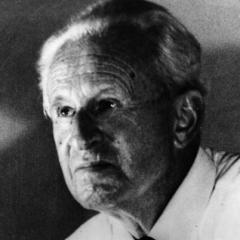
Herbert Marcuse
Herbert Marcuse was a German-American philosopher born on July 19, 1898, and died on June 29, 1979. He was one of the leading figures of the Frankfurt School and is known for his work on cultural criticism and social theory. more
You May Also Like
Source: One-Dimensional Man: Studies in the Ideology of Advanced Industrial Society
Source: One-Dimensional Man: Studies in the Ideology of Advanced Industrial Society
“This is the pure form of servitude: to exist as an instrument.”
Source: One-Dimensional Man: Studies in the Ideology of Advanced Industrial Society
Source: One-Dimensional Man: Studies in the Ideology of Advanced Industrial Society
Source: One-Dimensional Man: Studies in the Ideology of Advanced Industrial Society
Source: One-Dimensional Man: Studies in the Ideology of Advanced Industrial Society
Source: One-Dimensional Man: Studies in the Ideology of Advanced Industrial Society
Source: One-Dimensional Man: Studies in the Ideology of Advanced Industrial Society