“The tendency of a national bank is to increase public and private credit. The former gives power to the state, for the protection of its rights and interests: and the latter facilitates and extends the operations of commerce among individuals. Industry is increased, commodities are multiplied, agriculture and manufacturers flourish: and herein consists the true wealth and prosperity of a state.”
Quote by Alexander Hamilton
Work
The works of Alexander Hamilton: comprising his correspondence, and his political and official writings, exclusive of the federalist, civil and military
The Works of Alexander Hamilton is a comprehensive compilation of the correspondence and political and official writings of Alexander Hamilton. It offers insight into Hamilton's role in the early years of the United States, focusing on his contributions to the nation's political and legal development. The volume excludes Hamilton's work on The Federalist, as well as his writings on civil and military matters, providing a focused look at his political thought and correspondence. more
Author
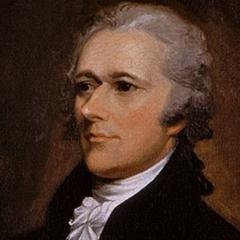
Alexander Hamilton
Alexander Hamilton was a Founding Father of the United States, born on January 11, 1757, and died on July 12, 1804. He played a crucial role in the American Revolutionary War and was instrumental in the drafting of the U.S. Constitution. As the first Secretary of the Treasury, Hamilton promoted fiscal stability and economic growth, establishing the First Bank of the United States and proposing solutions for federal debt. His ideas and policies had a profound impact on the early political and economic development of the United States. more
You May Also Like
Source: Memoirs of Benjamin Franklin
Source: Notes on the State of Virginia
Source: James Madison's
Source: The Federalist, on the New Constitution, Written in the Year 1788, by Mr. Hamilton, Mr. Madison, and Mr. Jay: with an Appendix, Containing the Letters of Pacificus and Helvidius, on the Proclamation of Neutrality of 1793; Also, the Original Articles of Confederation, and the Constitution of the United States, with the Amendments Made Thereto
Source: The Federalist, on the New Constitution, Written in the Year 1788
Source: The Fœderalist: A Collection of Essays, Written in Favor of the New Constitution, as Agreed Upon by the Fœderal Convention, September 17, 1787. Reprinted from the Original Text. With an Historical Introduction and Notes
Source: The Federalist, on the New Constitution
Source: Letters and Other Writings of James Madison