“I picture the vast realm of the sciences as an immense landscape scattered with patches of dark and light. The goal towards which we must work is either to extend the boundaries of the patches of light, or to increase their number. One of these tasks falls to the creative genius; the other requires a sort of sagacity combined with perfectionism.”
Quote by Denis Diderot
Work
Thoughts on the interpretation of nature: and other philosophical works
This book is a compilation of philosophical writings that delve into the interpretation of nature and its implications, offering insights into various philosophical ideas and discussions. more
Author
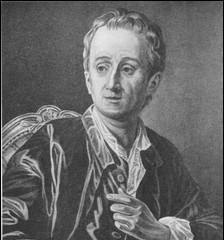
Denis Diderot
Denis Diderot was a French philosopher, art critic, and writer who played a pivotal role in the Enlightenment. He is best known for his work on the Encyclopédie, which aimed to compile all the knowledge of the time into a single work. more
You May Also Like
Source: A Practical Treatise on the Cultivation of the Dahlia
Source: De Officiis Or on Duties on Obligations
Source: The origin of life
“In natural science the principles of truth ought to be confirmed by observation.”
Source: Novum Organon Renovatum
Source: Hen's Teeth and Horse's Toes: Further Reflections in Natural History
“In the philosophic sense, observation shows and experiment teaches.”
Source: An Introduction to the Study of Experimental Medicine
Source: Under the apple trees